Primary school gives a child the tools for exploring the world and lifelong learning. First, students learn to read, and later, in middle and high school, they read to learn.
If students do not master reading comprehension in the early grades, it inevitably leads to difficulties in learning mathematics and natural sciences.
A new study, “Learning Losses in Primary School Amidst War,” by Teach For Ukraine shows the scale of this challenge: 46% of surveyed primary school teachers report that children experience critical difficulties with reading and text comprehension, while 51% note that students cannot independently solve word problems in mathematics. Without the ability to read, understand what is read, and work with information, it becomes increasingly difficult for a child to master any other subject.
The cause of these losses is not that children do not want to learn. Learning losses are formed under conditions of chronic stress from the war (81.1%), power outages (64.4%), and interrupted learning. That is why overcoming learning losses in primary school cannot be delayed: with each year, gaps accumulate and affect all areas of learning.
To help teachers and students catch up on knowledge and prevent the accumulation of gaps, Teach For Ukraine is expanding its activities to grades 2–4. In our feature, we explore why gamification and psychological support are powerless without a comprehensive approach, and how the new tutoring model for knowledge recovery in grades 2–4 will work.
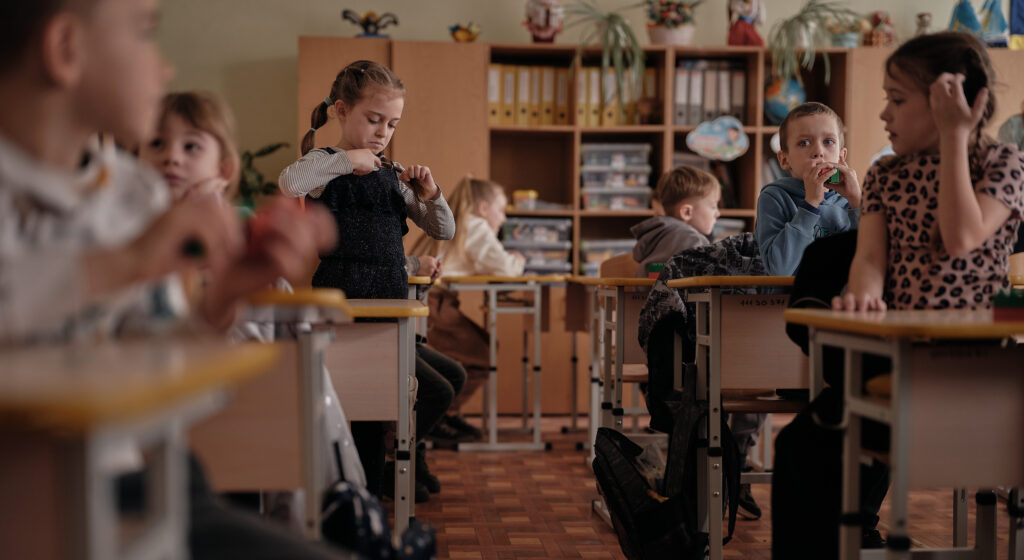
Around eight in the morning, Kateryna Tymchenko’s car stops near a school in Vyshneve, in the Kyiv region. There are five minutes left until the first lesson, but an air raid alert is already tearing across the Kyiv region’s sky. Kateryna and her first-grader daughter, Lina, stay inside the car. For an hour, they wait for the all-clear so they can finally enter the classroom. The teacher manages to conduct exactly half a lesson—the children are tackling the letter “A”—when the siren sounds again. The first-graders are sent home, and the school day that had barely begun comes to an irreversible end.
Kateryna is a project manager at Teach For Ukraine and an expert in primary education. As a mother, she is forced to focus first on her child’s basic psychological adaptation to the very idea of school:

“I don’t expect major academic progress this year,” Kateryna confesses. “It’s important for my daughter to understand what school is. To figure out why she needs it.”
However, as a professional educator, she strongly warns against attempts to excessively simplify primary school, reducing it solely to leisure, entertainment, and socialization:
“The role of primary school is vastly underestimated; in reality, it has an extraordinarily powerful academic component,” she emphasizes. “This is where the foundation of foundations is laid: children learn how to learn. Basic writing and reading skills, early knowledge about nature—all of this is formed right now. Later on, they simply won’t have the time to dive deeply into it. That is why it is so crucial that children get the opportunity to build this foundation.”
For years, the Teach For Ukraine team has researched and bridged learning losses in middle and high school. However, the protracted nature of the full-scale war has forced the organization’s educational research focus toward those whose school start coincided with the escalation of the war, and whose tools for exploring the world are being formed right at this moment.
It is out of the study “Learning Losses in Primary School Amidst War” that Teach For Ukraine’s new area of work grows—its first to systematically cover primary school.
“We are launching tutoring sessions to bridge learning losses for primary school students. This is a particularly critical age because basic skills—primarily reading and arithmetic—are formed right now. If a child does not master them at a sufficient level, it becomes significantly harder for them to absorb information, study, and develop later on,” notes Anastasiia Donska, program director at Teach For Ukraine. “We already see the scale of the learning loss problem nationwide. According to PISA-2025 results, about 45% of Ukrainian 15-year-olds in the regions covered by the study fail to reach the baseline level of reading literacy, and about 46% fail to reach the baseline level in mathematics. For us, this is yet another argument for why we need to address learning losses much earlier—back in primary school, when fundamental skills for future learning are being formed.”
This problem is felt most acutely, Anastasiia Donska notes, in frontline communities. Therefore, knowledge recovery sessions are starting for children forced to study online near the demarcation line. For the team, this area of work is a way to contribute to preserving the country’s human capital.
“Our operational priority is that every child in Ukraine must be able to read and count,” Anastasiia Donska concludes. “Regardless of where they were born, where they live, and the conditions under which they study today, they must have the opportunity to unlock their potential.”
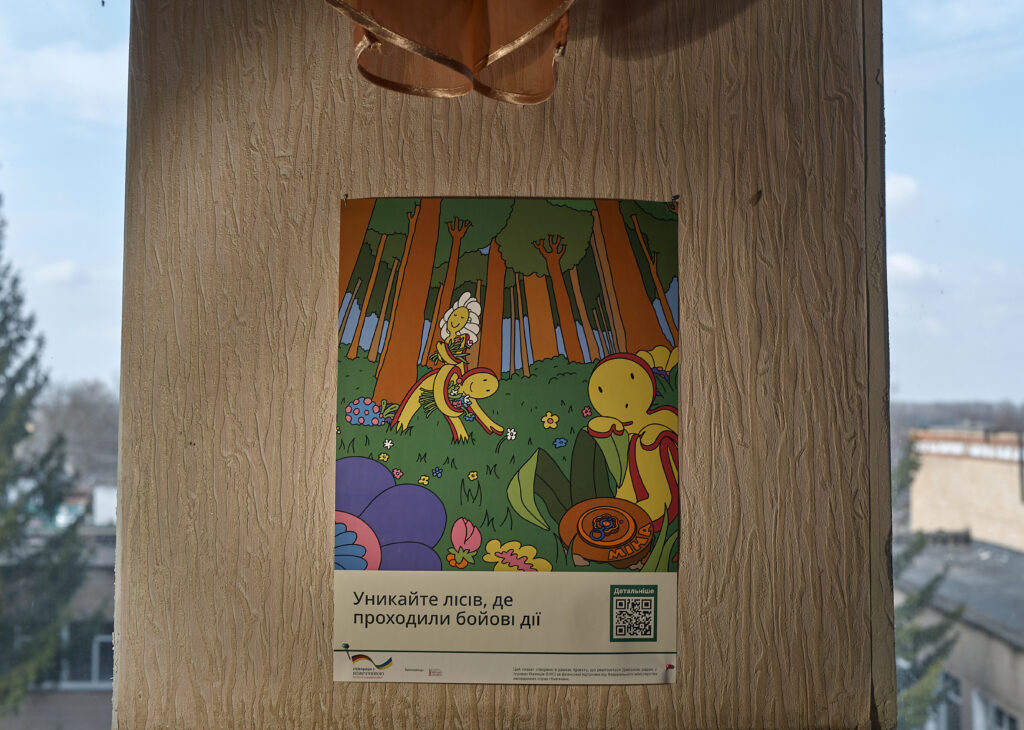
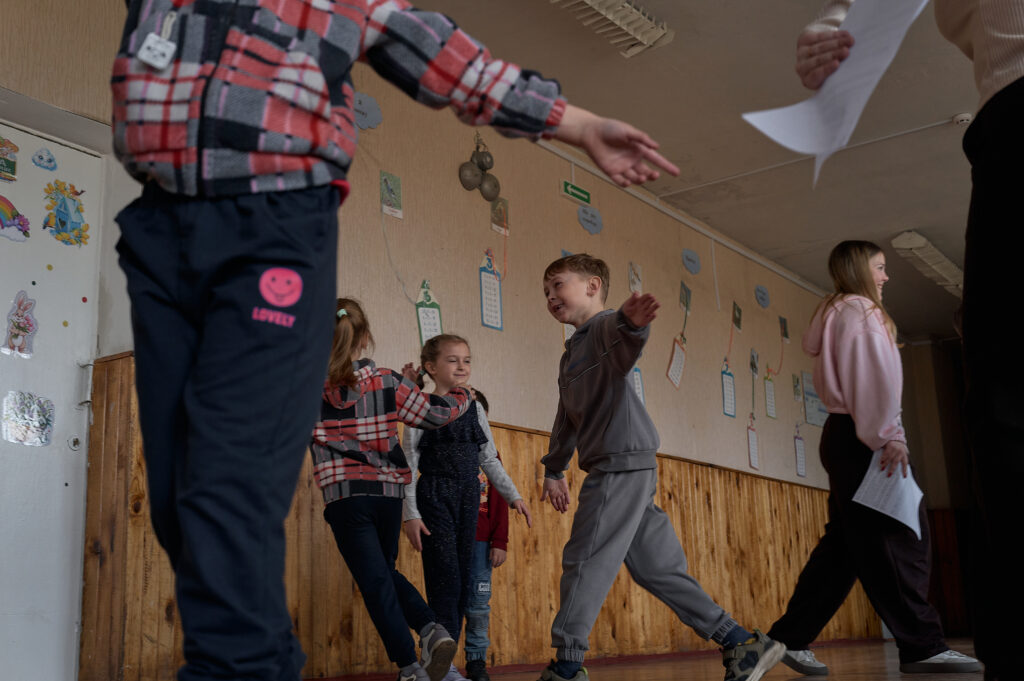
The analytical report is based on the experiences of 90 primary school teachers, with another 24 educators participating in in-depth focus groups. More than 55% of these specialists work in frontline and most heavily affected regions, and the majority of them have over 20 years of pedagogical experience.
Nearly half of the surveyed educators—46%—cite reading comprehension as the biggest problem.
“I see the key problem as a failure to understand what is read,” shares a teacher in one of the focus groups. “Children read just to pronounce the letters or words… but not to grasp the meaning.”
All of a child’s resources go toward recognizing the text: the child looks at the book and recognizes letters, painstakingly putting them together into syllables, words, and sentences. However, students do not retain the meaning of what is written in their heads, do not understand the vocabulary, and cannot retell, ask questions, or distinguish fact from opinion. Reading fails to fulfill its function as a learning tool. Teachers point to the lack of a Ukrainian-speaking environment outside of school as one of the problems—children often do not understand the vocabulary, and the teacher has to spend class time explaining individual words.
As Olga Kazakova, a research expert in the learning research department at Teach For Ukraine, explains, reading comprehension requires the continuity of two processes: within a single sentence, a child must connect new words with those already read, and over the course of weeks and months, they must practice regularly. Air raid alerts and blackouts disrupt both processes, but in different ways. Returning to a task requires extra time and burdens working memory. In addition, recurring alerts and blackouts constantly cut practice short: if a lesson is interrupted, the child loses part of the shared reading and explanations.
“When a child reads, it’s as if they are guiding a thread through the text, which weaves into an understanding of the overall picture,” Olga Kazakova explains. “Each new word is tied to what is already familiar. An air raid alert forces them to put the thread aside and take care of safety. Upon returning, the child has to find where they stopped, remember which thread goes where, and how it weaves into the overall pattern. If lessons are constantly interrupted, the little ones simply lack the time to practice reading, which inevitably affects the quality of the ‘fabric.’”
An additional factor is the remote learning format. As demonstrated by the Report on the Results of State Monitoring of Primary School Education Quality 2025, the key factor is not the online format itself, but how it is organized: students who frequently received assignments for independent work without proper teacher explanations showed significantly lower reading results. The most crucial thing remains whether the child has the opportunity to read together with the teacher, ask questions, and receive real-time feedback.
The inability to read complicates learning across all other disciplines. More than 51% of teachers note that word problems are the biggest obstacle in mathematics.
“They don’t understand the problems they read because they don’t even know many of the words… you have to put every problem on the screen with little pictures,” says another study participant.
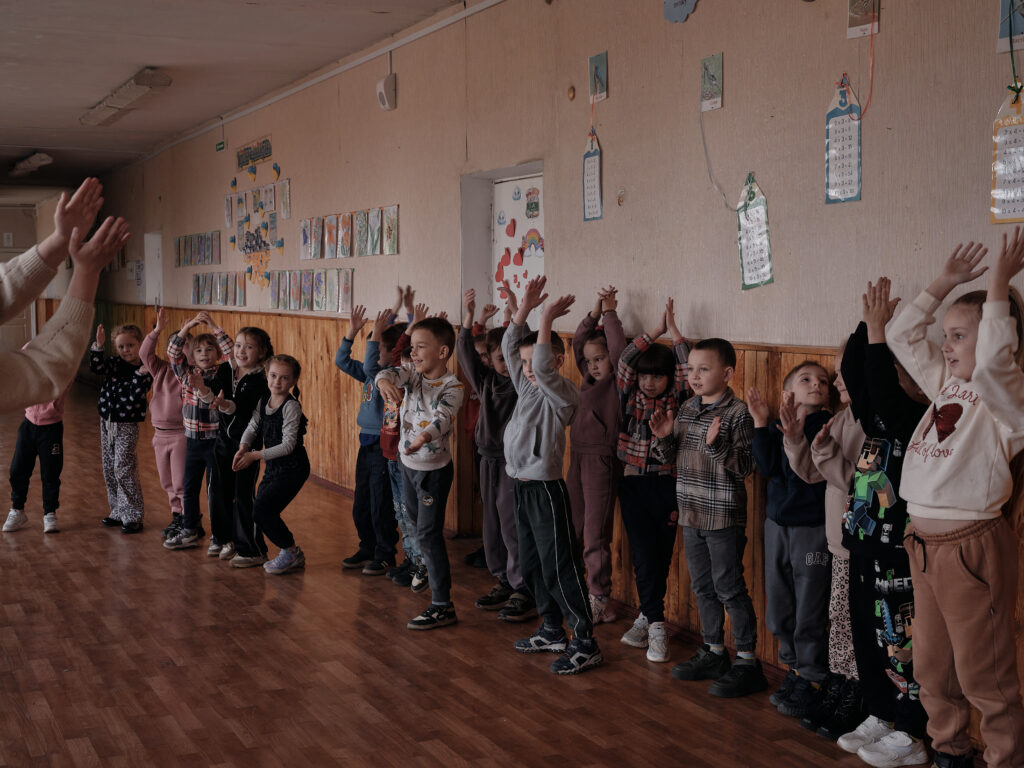
Children have the most trouble not with the multiplication table—operations with numbers worry only a quarter of the surveyed teachers. Comprehending the text itself is the problem: children cannot extract data from the conditions, build a sequence of actions, or simply grasp what is being asked of them. Geometry presents a separate hurdle: it is difficult to visualize shapes and construct figures.
The study also explains the nature of learning losses in primary school and debunks the myth of “generational unreadiness,” motivation issues, and gadgets. Learning is a process that requires internal stability, safety, established self-regulation, and a steady daily routine. Teachers attribute learning losses to chronic stress and a constant sense of danger—81.1% of respondents point to this. 64.4% of educators named power outages as a problem, and another 57.8% pointed to online learning.
“In first and second grade, we had blended learning—a week at school, a week at home… either the power is out or the internet is out, and the children did almost nothing at home,” shares a focus group participant.
The scale of the problem is also evident in the school where Kateryna’s daughter now studies. Due to shelter issues, out of two thousand students, only two under-capacity special classes—about 15 children—physically attended lessons in early September. The rest were forced to study remotely.
“We had a week of conditional online learning,” Kateryna recalls. “When there is an air raid alert in the morning, the lesson cannot take place. For first-graders, online practically means a lack of access to education.”
Under conditions where the school physically cannot provide continuous learning, the responsibility for organizing the educational process falls on families. Low parental involvement (41.1%) is listed among the causes of losses in the study. However, educators explain this not by indifference, but by the circumstances parents find themselves in: forced displacement, loss of income, and exhausting daily routines during blackouts.
“Some parents move from one job to another, they are IDPs [internally displaced persons], and they don’t have time to help the child with their studies,” educators say.
“Two days a week I get home at ten in the morning, we finish the school day, and my daughter just runs around near me,” Kateryna confesses. “I understand that every day I have to write and count with her myself. On top of what parents usually do in any grade, I also have to teach her what they could have covered at school. Russia is taking that opportunity away from them.”
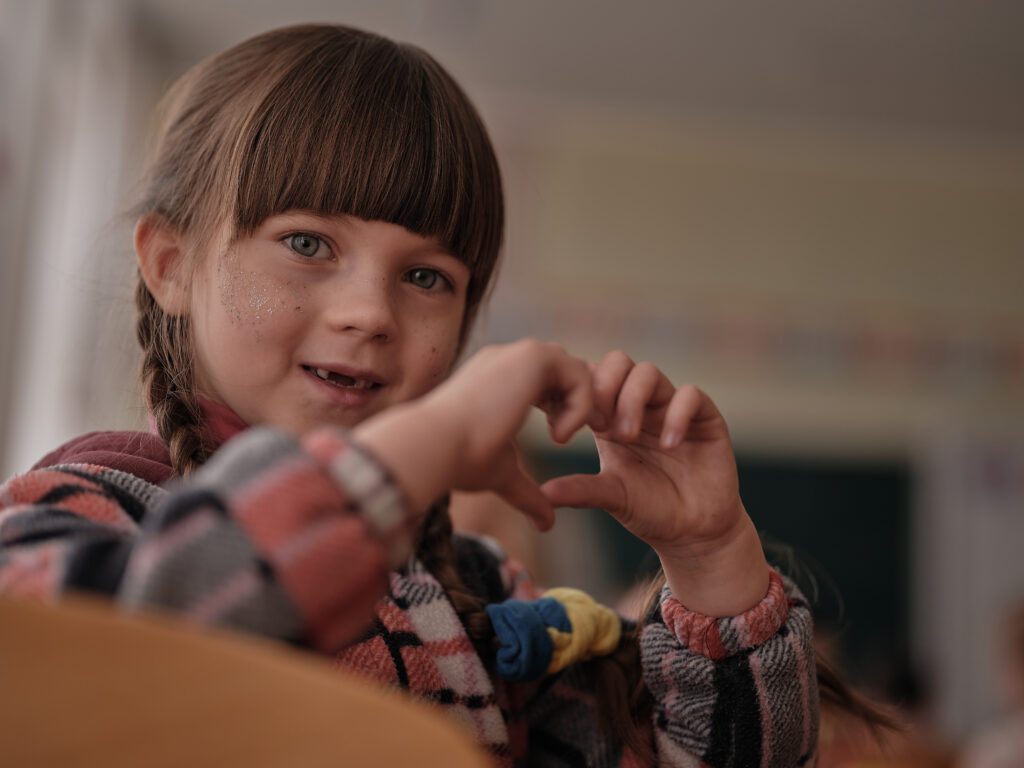
Olga Kazakova also explains the fundamental difference between learning losses at different ages. In middle and high school, gaps mostly concern subject content—a skipped history chapter can be caught up on later. In contrast, in primary school, a child is not accumulating facts as much as acquiring the tools to absorb them:
“An unformed topic in biology is a gap in biology, but insufficiently developed reading is a gap in almost every subject. If a second-grader spends all their resources just decoding words, then by fifth grade they will have to simultaneously read the problem, hold it in memory, apply a rule, and check themselves. An initial reading deficit later turns into what we are used to calling lagging in math, difficulties with natural sciences, or plain inattention.”
That is why the Teach For Ukraine team considers early intervention critically necessary—it can halt the process of gap accumulation. Olga explains that, apart from academic performance problems, knowledge deficits inevitably spawn secondary consequences—through repeated experiences of failure in class, a teenager later begins to avoid difficult tasks, loses faith in their own abilities, and loses motivation. Late intervention is forced to fight not only the academic gap but behavioral resistance as well.
In addition, children from low socioeconomic backgrounds are the most vulnerable, so early intervention by the school itself will help level their chances of obtaining a quality education.
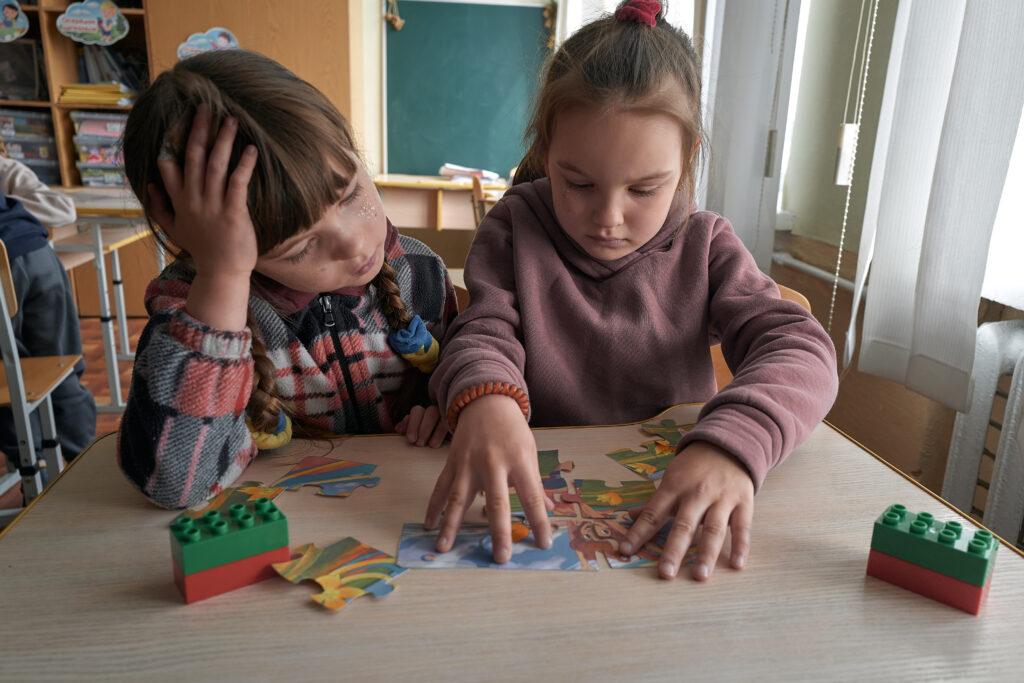
Today, the lion’s share of work to overcome learning losses relies purely on teachers’ enthusiasm. Educators divide children into groups on their own, keep them for individual sessions after classes, and work in multiple shifts.
At the same time, teachers say that bright interactive games or increasing the number of hours cannot solve the problem if reading competence is not formed. Digital platforms and game formats are built as a superstructure. They assume the child is already able to quickly read the problem and understand the game rules. Standard textbooks written for peacetime do not work either—they assume children come to school with certain established competencies after kindergarten, whereas today this foundation is often missing.
According to specialists in the research department at Teach For Ukraine, systematic recovery of learning losses in primary school must rely on a diagnostically driven tutoring model. The organization has been working with the tutoring approach since 2022, and its high effectiveness was previously confirmed by a joint study between Teach For Ukraine and the World Bank.
The model proposed for addressing learning losses in primary school involves the following steps:
- Regular and brief diagnostics. Checking micro-skills (reading comprehension, vocabulary, understanding of quantities) should happen every 6–8 weeks.
- Grouping by gap. Children are grouped into small groups (2–5 students) based on a specific need: for example, practicing text retelling or working with the multiplication table.
- Integrating reading into other subjects. A word problem needs to be analyzed primarily as text: figuring out who the actors are, what is known, and only then moving on to mathematical formulas.
- Psychosocial support in tandem with learning intervention. Stabilizing emotional state creates conditions for learning, while educational losses are overcome through regular, diagnostically precise, and well-structured practice.
The organization’s work focuses on restoring key tools of cognition: reading and mathematical competence.
The program “The Tutoring Approach in Bridging Learning Losses in Primary School: Grades 2–4” is structured to give teachers a full cycle of working with a child during wartime. Educators will learn to conduct targeted diagnostics, apply formative assessment, build individual educational pathways, and use gamification and storytelling. A separate focus of the program is helping teachers plan their activities in a way that preserves their own resources.
Trainer training took place in early September, and the first direct trainings for grade 2–4 teachers take place on September 26–27. Following the trainings, Teach For Ukraine will provide supervisory support to teachers who begin working with children. The pilot wave of the program kicks off in October for children from the Dnipropetrovsk, Donetsk, Luhansk, and Zaporizhzhia regions. Children will study online for 8.5 weeks.
This is a response to a challenge that is shared by the entire country today. Children are studying at a peacetime pace under conditions where the educational process has ceased to be continuous. The mismatch between the pace of learning and the created conditions is felt most acutely in frontline regions, where air raid alerts account for 60% to over 80% of working hours.
You can read the full text of the study “Learning Losses in Primary School Amidst War” by Teach For Ukraine via the following link:
Research work forms the basis for developing programs by Teach For Ukraine, which operates at the intersection of state challenges and the needs of children and teachers. The organization’s activities are aimed at bridging learning losses, supporting students most affected by the war, and overcoming educational inequality between urban and rural areas. Educational Support Program helps children in frontline territories catch up on knowledge for free through supplementary classes using tutoring methodology. To support the teaching community and provide them with quality methodological materials for working with children today, the organization develops special guidebooks and educational series.