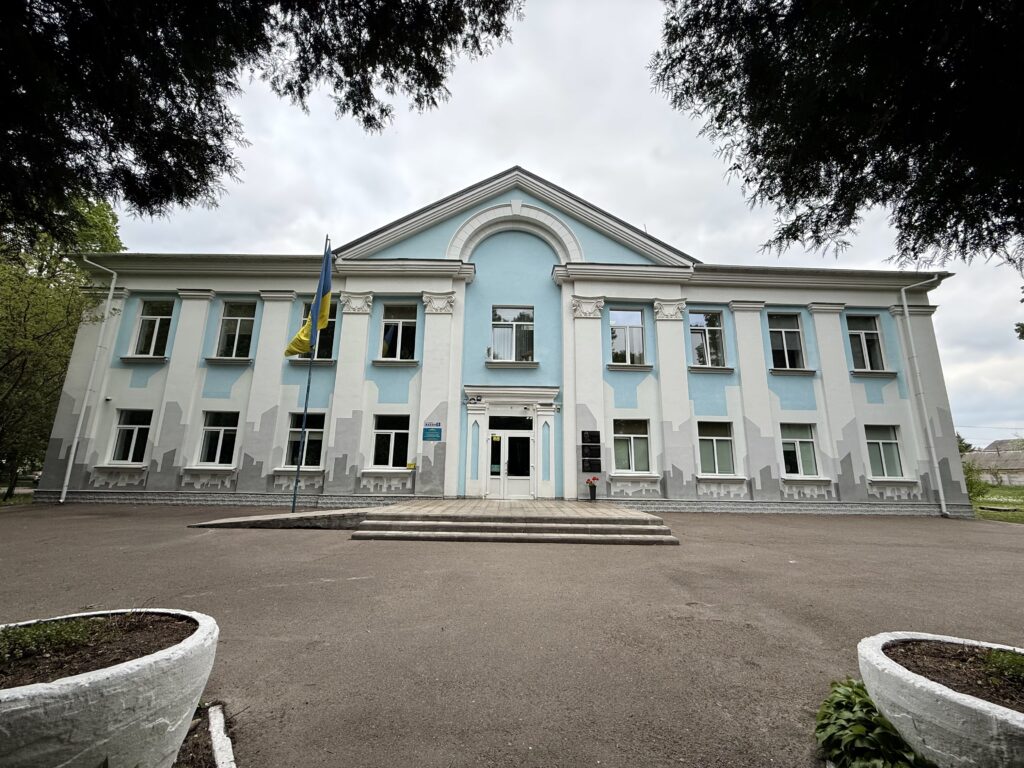
On a Saturday morning, the halls of Petrivskyi Lyceum were filled with life. Children debated, refined their arguments, and gathered for photos following a “Debate Start” competition. But by evening, shattered glass littered the classrooms, and fragmentation marks scarred the building’s walls and facade. The school – vibrant with activity only hours earlier – was left partially unfit for learning.
On September 19, the village of Stari Petrivtsi in the Kyiv region came under Russian attack. The blast wave and shrapnel severely damaged the main building of Petrivskyi Lyceum, shattering windows, gutting classrooms, and damaging a school bus. The strike caused human casualties, killing a local teenager who was passing by the school alongside his mother when the explosion hit.

Photos provided by Olha Petrovska, Principal of the Petrivskyi Lyceum.

Today, the lyceum continues to function, though a full return to in-person learning remains impossible.
Ukrainian schools are operating under conditions where an uninterrupted education is often simply out of reach. Air raid sirens routinely disrupt lessons, forcing students and teachers into bomb shelters, throwing schedules into disarray, and compelling classes to move online. Compounding these daily disruptions are relentless strikes, power outages, cellular blackouts, forced displacement, and constant psychological stress.
This academic year, the security situation has grown even more dire. In the first 15 days of September 2026 alone, more than 1,000 air raid sirens sounded across Ukraine – nearly double the number recorded during the same period last year.
Compounding this daily instability is the direct physical threat of strikes and the destruction of educational infrastructure. The attack on Petrivskyi Lyceum is just one of hundreds of such cases. According to a special edition of the Global Coalition to Protect Education from Attack (GCPEA) Education Under Attack 2026 report, more than 900 attacks on schools were recorded in Ukraine throughout 2024–2025. Since the start of the full-scale invasion, 1,611 educational institutions have been damaged or destroyed, 339 of them completely ruined.
The toll extends far beyond damaged brick and mortar. Some 741,000 Ukrainian children are forced to study through a hybrid model, while another 443,000 rely entirely on remote learning. In total, nearly 1.2 million schoolchildren lack access to uninterrupted, in-person education, with learning losses for some students amounting to one to two full years.
Behind each of these numbers are real schools, teachers, children, and communities striving daily to keep education alive. For the organization Teach for Ukraine, Petrivskyi Lyceum has long been a key partner. Currently, two Teach for Ukraine participants—Anastasiia Semeniuk and Zoia Komisar—teach at the lyceum, alongside program alumnae Kseniia Lentsova, Anna Bozhko, Inna Stokratna, and Alla Shakhova, who continue their educational mission there.

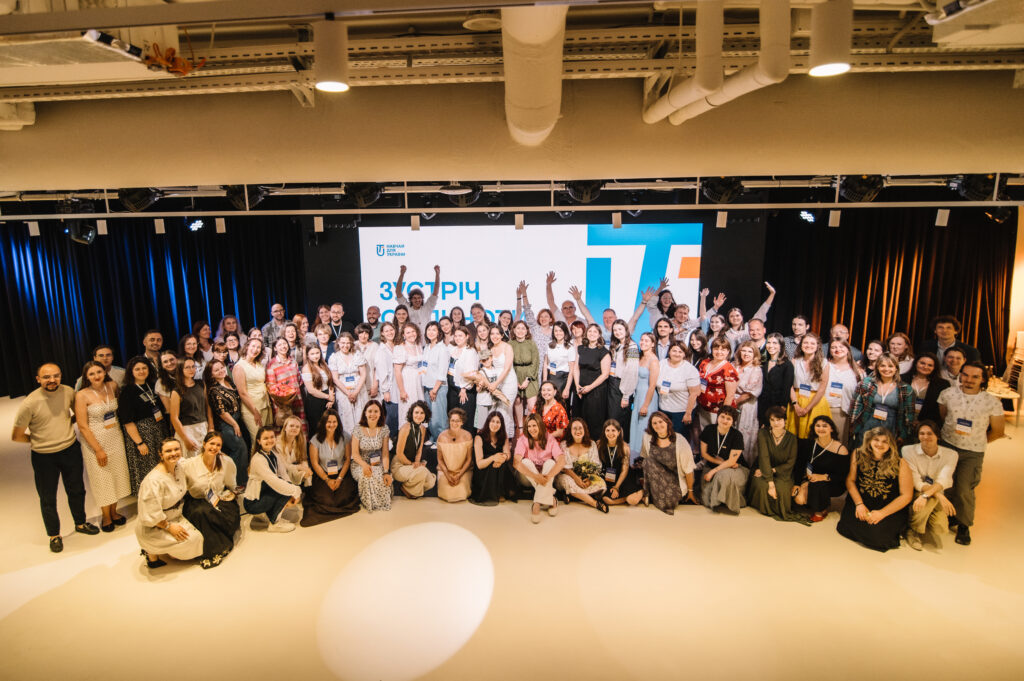
Archival photo provided by the NGO Teach for Ukraine. Left to right: Kseniia Lentsova, Zoia Komisar, Olha Petrovska, and Anna Bozhko.
Anna Bozhko, Deputy Principal for Educational Work, English teacher, and NGO Teach for Ukraine alumna:

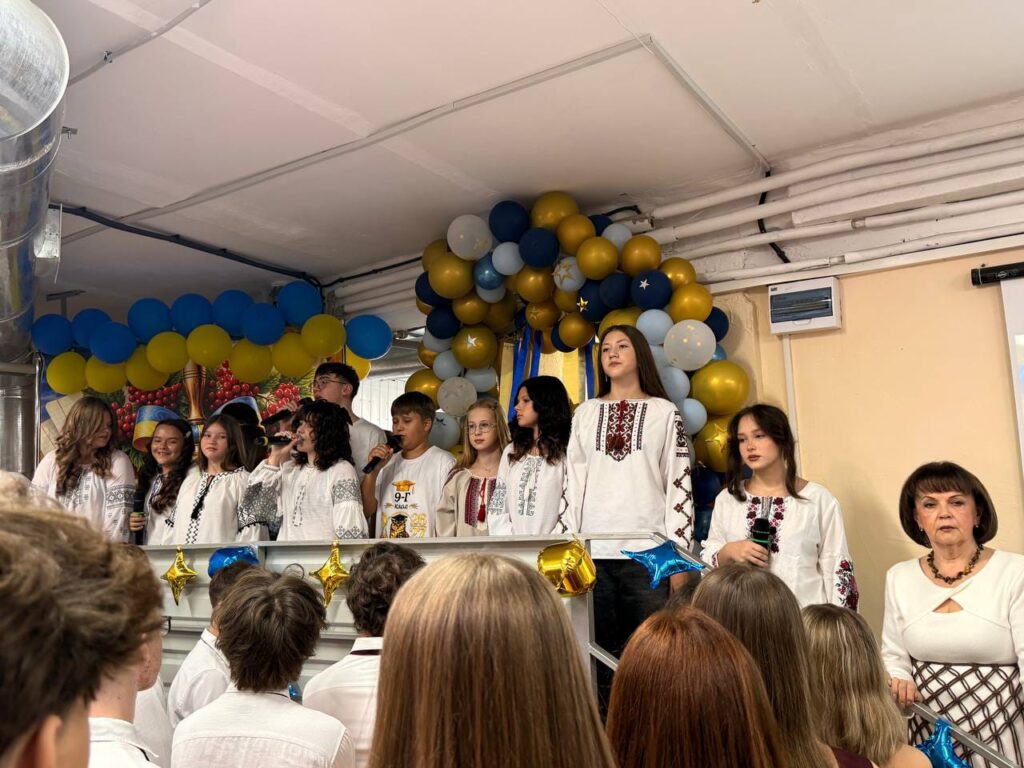
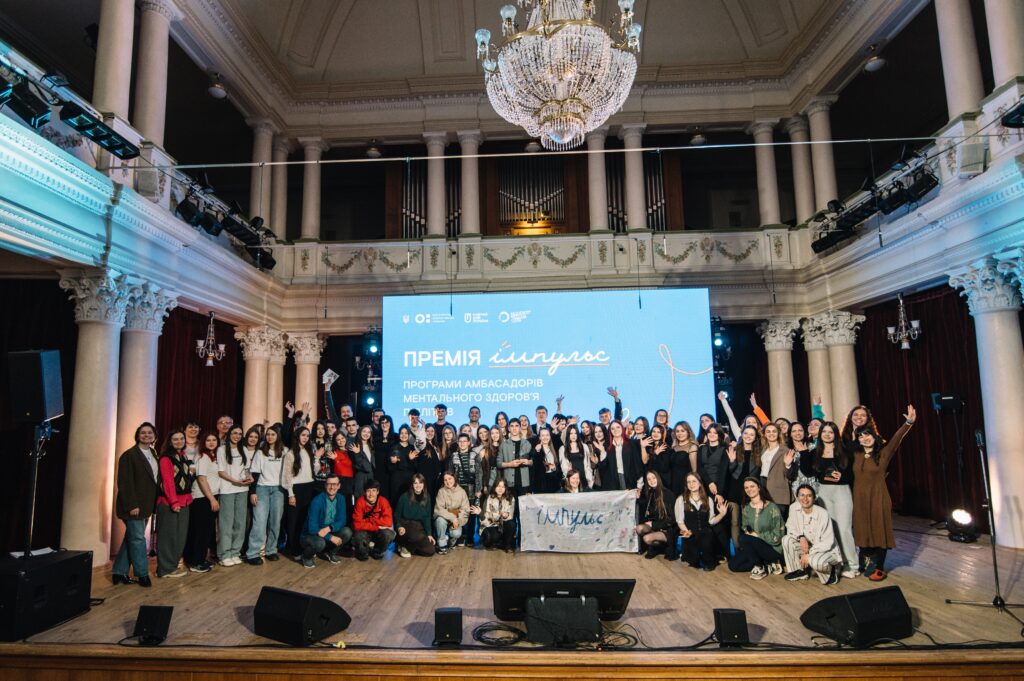
“Just hours before the explosions, our lyceum was hosting a major event—‘Debate Start,’ a project for students and teachers supported by a grant from the NGO Teach for Ukraine. Living in wartime demands maximum adaptability from us. Only minutes before registration was set to begin, an air raid siren sounded, so we immediately moved to the shelter, where the entire event took place. Despite train delays and frequent air raid alerts, teams from Kyiv and the surrounding region still made it to us, alongside a guest trainer who traveled all the way from Lutsk.
We were extremely fortunate with our timing: near the end of the event, around 6:00 PM, the all-clear sounded. We gathered in the main hall, took a group photo, and safely sent everyone on their way home. It was only after our guests had departed that another air raid alarm sounded, followed just two hours later by the strike itself. By the time the explosion hit, the school was completely empty.
This stark contrast—hosting a vibrant educational event one moment and facing explosions two hours later—is our current reality as we fight to preserve a normal childhood and quality education for our students.”

Учасники проєкту «Дебатний Старт». Фото надані Анною Божко

Olha Petrovska, Principal of Petrivskyi Lyceum
“Our team is made of truly extraordinary people—real pillars of strength—and the same goes for our students’ parents. The very next day after the strike, on Sunday, we all gathered at the lyceum. Parents, teachers, and staff joined hands to clear away shattered glass, pick shrapnel out of the lawns, and do everything within their power before sealing the damaged windows and doorways with plastic sheeting.
While the windows and doors are now covered, it doesn’t provide the insulation needed to keep the building warm. People have done an incredible amount of work, but with cold weather approaching, it is simply not enough for us to resume full-scale, in-person classes.”

Olha Petrovska, Principal of the Lyceum. Photo: Teach for Ukraine archive.
“Parents have been deeply understanding of the situation, as everyone was left in shock. Many of them were right nearby when the strike occurred. Unfortunately, some of the children are struggling with severe psychological distress right now. I don’t know if this particular attack was the final straw, but several parents have decided to relocate—some to western Ukraine, others abroad. Yet, many children were genuinely eager to return to school. Primary school pupils even asked teachers to give them a tour of the building so they could see the damage for themselves”

Photos provided by Olha Petrovska, Principal of the Petrivskyi Lyceum

The primary grades have already returned to in-person classes in their usual classrooms, as their wing of the building was left unscathed. For middle school, we conducted a survey among parents: where the majority voted for in-person learning, students have returned to the classrooms where the windows remained intact. For the rest, we have organized remote learning.
This is certainly demanding for our teachers, who now have to run both in-person and online classes simultaneously. But I am profoundly grateful to them; everyone is handling this with immense patience, and we are doing everything we can to protect our children’s education and support them.
Fully replacing the damaged windows and doors will require over 2 million UAH – approximately 45,000 USD. We are appealing to charitable foundations and various organizations for help.
Donations are already coming into our charity account from parents and local residents, and we are deeply grateful for every contribution. However, it is a staggering sum, and we cannot raise it alone. We earnestly hope to resolve this issue before the cold weather sets in.
Education is not just about the volume of knowledge we deliver during lessons or through specific subjects. Education, above all, is about leading by example. In 20 or 30 years, these children may not remember Ohm’s law or the Pythagorean theorem. But they will remember that while someone tried to strip away their safe haven—a place where they not only gained knowledge, but met friends, held discussions, debated, and grew as individuals—that school stood tall and was restored. And that the adults around them helped make it happen.”
Every contribution helps return children to safe, warm classrooms and a full school experience. We are sharing the banking details for anyone who wishes to support the school.
Donation Details:
IBAN: UA248201720314201004301042885
Recipient: Petrivskyi Lyceum of Petrivtsi Village Council
Tax ID: 25565312
Payment Purpose (Mandatory): Charitable assistance for the restoration of the educational institution (Благодійна допомога на відновлення закладу освіти)
You can also make a contribution via this quick payment link:
PayPal: [email protected]