Intellectual volunteering program from Teach For Ukraine
Do you want to help students from the frontline regions catch up with lost knowledge? Register, and develop yourself by developing others.


What is intellectual volunteering?
This is when you help others not with money or physical labor, but with what you know and can do: with your knowledge, ideas, experience, creativity. You grow yourself and at the same time help others grow. This is an opportunity to make a real contribution to the education of children during the war. It also means extra points to the quality of your resume and a real impact on the future in the labor market.
Together through the StudMentor program, we are:
• making mentoring support available to children who need it most;
• promoting intellectual volunteering;
• creating a space where everyone can share knowledge and grow with others.
We believe that everyone has something to share. And it matters.

After successfully passing the subject proficiency test and interview, the next stage of participating in the program begins — the training stage!


During the intensive course, you will learn about:
– personal development map and goal setting;
– lesson structure;
– features of individual and group interaction with children of different ages;
– working with resistance;
– active listening practices;
– effective questions;
– environmental feedback and growth thinking;
– working with children with special educational needs.

Developing mentoring skills and using them to help the younger generation is one of the tools for a real, tangible impact on Ukrainian education. This educational series was created so that as many people as possible could provide high-quality support to Ukrainian schoolchildren who faced many difficulties on the way to high-quality education. Over the course of 12 episodes, educational experts will introduce you to:
– the basics of mentor-mentee interaction;
– tools for building communication with children and effective communication with them;
– the way our brain learns, what motivates and demotivates us;
– growth mindset;
– skills of providing psychological first aid.


I’m incredibly happy to have become part of this community. It’s been an amazing experience — especially for me as a student — because I had the chance to truly step into the role of a teacher and mentor. 🥰
I’m so grateful for all the support and guidance at every step of the way. These are incredibly valuable lessons. 🔥
By the way, I’m currently studying geography teaching methodology at university, and all the skills I gained here are helping me so much in my studies. I even had the chance to demonstrate icebreakers and growth mindset activities to my classmates. 😎
It feels like I just recently joined the intensive training… and now my 16 lessons are already done 💔
Long story short — I just want to say a huge thank you, and I’m sure this won’t be my last time working with StudMentor! 🫶
I’m incredibly happy to have become part of this community. It’s been an amazing experience — especially for me as a student — because I had the chance to truly step into the role of a teacher and mentor. 🥰
I’m so grateful for all the support and guidance at every step of the way. These are incredibly valuable lessons. 🔥
By the way, I’m currently studying geography teaching methodology at university, and all the skills I gained here are helping me so much in my studies. I even had the chance to demonstrate icebreakers and growth mindset activities to my classmates. 😎
It feels like I just recently joined the intensive training… and now my 16 lessons are already done 💔
Long story short — I just want to say a huge thank you, and I’m sure this won’t be my last time working with StudMentor! 🫶

The program showed me that:
Working with children is something incredible and truly amazing. Yes, there were tough moments – of course – but it filled me with energy, drive, and emotions like nothing else.
I discovered a new part of myself. I uncovered the role of a mentor/teacher/guide within me – someone who connects with kids easily and knows how to explain complex things in a simple, relatable way.
It became a form of healing for me and had a therapeutic effect. Together, we learned how to reflect, talk about our feelings, set goals, and not be afraid to simply be human.
The program showed me that:
Working with children is something incredible and truly amazing. Yes, there were tough moments – of course – but it filled me with energy, drive, and emotions like nothing else.
I discovered a new part of myself. I uncovered the role of a mentor/teacher/guide within me – someone who connects with kids easily and knows how to explain complex things in a simple, relatable way.
It became a form of healing for me and had a therapeutic effect. Together, we learned how to reflect, talk about our feelings, set goals, and not be afraid to simply be human.
StudMentor, to me, means so many things.
It’s about witnessing the growth of my mentees. It’s about building friendships with the younger generation. It’s about exploring math together in a friendly, supportive atmosphere, and showing my mentees how I see this subject.
It’s about seeing their positive emotions and hearing feedback from them and their parents — for some, the lessons helped to understand a difficult topic; for others, it became a chance to socialize with peers.
For me, it’s a chance to make real math feel less scary, to teach how to ask questions, to fear mistakes less and learn through them, and to encourage independent thinking.
StudMentor, to me, means so many things.
It’s about witnessing the growth of my mentees. It’s about building friendships with the younger generation. It’s about exploring math together in a friendly, supportive atmosphere, and showing my mentees how I see this subject.
It’s about seeing their positive emotions and hearing feedback from them and their parents — for some, the lessons helped to understand a difficult topic; for others, it became a chance to socialize with peers.
For me, it’s a chance to make real math feel less scary, to teach how to ask questions, to fear mistakes less and learn through them, and to encourage independent thinking.
It started as a coincidence, but grew into something truly valuable and meaningful. StudMentor gave me a completely new experience: trainings, skills, techniques, supervision, real teaching practice, support when things didn’t go as planned, motivation and inspiration. But most importantly – it gave me a community of wonderful people, among whom I felt like I truly belonged.
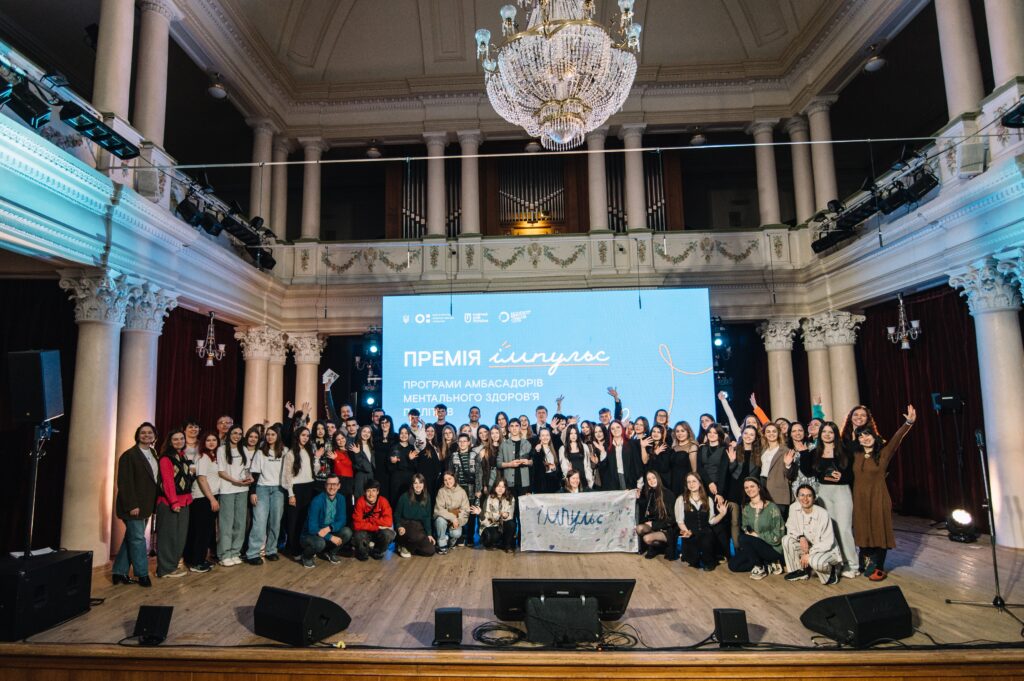
One of the brightest memories from the program was the training in Lviv – I’m still incredibly grateful to the entire team and everyone involved for that time and those memories. For the first time in a long while, I found myself in an atmosphere where I could just be myself – a place filled with inspiration and powerful synergy. It was simply wow.
Other vivid memories include the first and last lessons with my wave – when you’re just getting to know your students at the beginning, and then saying goodbye with a heavy heart at the end. I still remember my mentees from previous groups and the little traditions we had together. I remember their words of gratitude and their smiles.
Thanks to the program, I was finally able to bring my vision of teaching my favorite subject to life. I had the chance to show kids how engaging and interactive this subject can be. StudMentor revealed a new side of me – and it was definitely for the better.
It started as a coincidence, but grew into something truly valuable and meaningful. StudMentor gave me a completely new experience: trainings, skills, techniques, supervision, real teaching practice, support when things didn’t go as planned, motivation and inspiration. But most importantly – it gave me a community of wonderful people, among whom I felt like I truly belonged.
One of the brightest memories from the program was the training in Lviv – I’m still incredibly grateful to the entire team and everyone involved for that time and those memories. For the first time in a long while, I found myself in an atmosphere where I could just be myself – a place filled with inspiration and powerful synergy. It was simply wow.
Other vivid memories include the first and last lessons with my wave – when you’re just getting to know your students at the beginning, and then saying goodbye with a heavy heart at the end. I still remember my mentees from previous groups and the little traditions we had together. I remember their words of gratitude and their smiles.
Thanks to the program, I was finally able to bring my vision of teaching my favorite subject to life. I had the chance to show kids how engaging and interactive this subject can be. StudMentor revealed a new side of me – and it was definitely for the better.
Thanks to StudMentor, I realized how powerful volunteering really is. To be honest, I had very little volunteer experience before this. And suddenly, I got the chance to join this vibrant, intellectual community of young people ready to do the work. You begin to understand that not everything in this world is about money. So many real, good things, they happen just like this.
Thanks to StudMentor, I realized how powerful volunteering really is. To be honest, I had very little volunteer experience before this. And suddenly, I got the chance to join this vibrant, intellectual community of young people ready to do the work. You begin to understand that not everything in this world is about money. So many real, good things, they happen just like this.
StudMentor gave me the opportunity to teach differently. Once, a student told me, “It seems like the moment you enter teacher training, someone implants the phrase, ‘Did you forget your head at home?’”
StudMentor is a program that lets you reimagine what teaching can sound like, and feel like. Sure, it may not erase every classroom cliché like “Should I divide that grade between you two?”, but it gives you room to respond with compassion, especially in stressful moments.
StudMentor gave me the opportunity to teach differently. Once, a student told me, “It seems like the moment you enter teacher training, someone implants the phrase, ‘Did you forget your head at home?’”
StudMentor is a program that lets you reimagine what teaching can sound like, and feel like. Sure, it may not erase every classroom cliché like “Should I divide that grade between you two?”, but it gives you room to respond with compassion, especially in stressful moments.
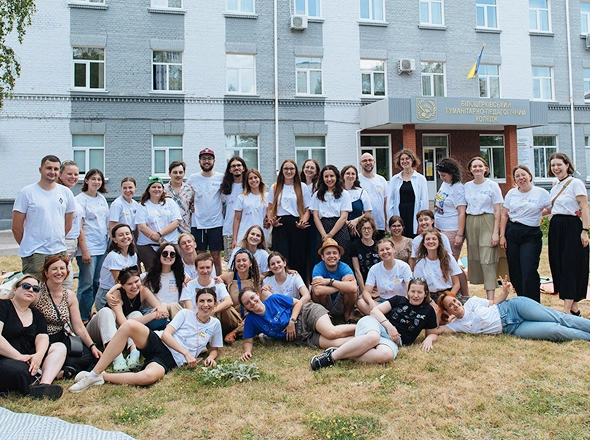
This program gave me a community, and that’s what I value most in any organization I join. Even our group chat, where all the StudMentors hang out, is a source of joy. I’ll pop into the biology group, peek at their topics. Or the history channel, and see icebreakers like “Which medieval ruler are you today — Olga? Sviatoslav? A furious prince?” It’s hilarious.
StudMentor is a community. And it’s a gift to find people you truly want to spend time with, create with, grow with.
This program gave me a community, and that’s what I value most in any organization I join. Even our group chat, where all the StudMentors hang out, is a source of joy. I’ll pop into the biology group, peek at their topics. Or the history channel, and see icebreakers like “Which medieval ruler are you today — Olga? Sviatoslav? A furious prince?” It’s hilarious.
StudMentor is a community. And it’s a gift to find people you truly want to spend time with, create with, grow with.


All children in the program need academic and emotional support.
We prioritize students from frontline regions and vulnerable backgrounds.
Parents usually complete the application with their children.
Even if a child isn’t initially motivated, we’ll teach you how to capture their interest and help them fall in love with learning.
Yes. Before your mentoring wave, you’ll receive a list of groups to choose from, with:
– grade level
– number of students
– their self-assessed subject level
– preferred time slots
You choose one or two groups that match your availability and preferences.
Each session includes:
– an emotional check-in
– the main academic section
– development of soft skills
– reflection at the end
We aim to create a safe space where children feel seen and engaged through their interests and hobbies.
A subject map is a list of key topics students should know in each grade.
We focus on learning recovery, so a 9th grade student might work on 8th grade content.
Training happens before your mentoring wave in two options: weekday evenings or weekends. Sessions with your subject mentor are scheduled individually.