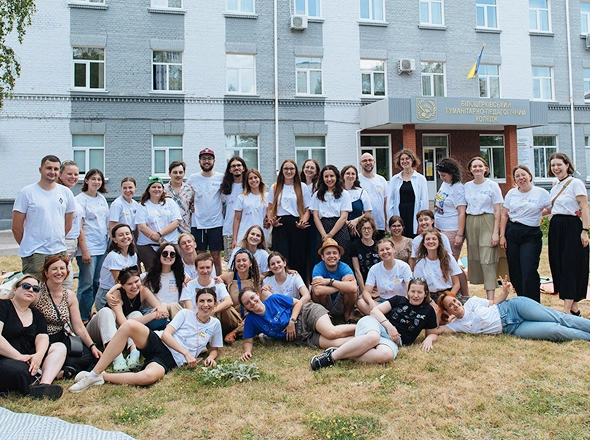
The Hrebinka Academic Lyceum Experience: Why the School Has Been Recruiting Teachers Through the Teach For Ukraine Fellowship for Several Years Running
10 june, 2026
Author: ГО «Навчай для України»
Share:
The Hrebinka Lyceum in Kyiv Oblast has been welcoming Teach For Ukraine Fellows for several years in a row. Principal Yuliia shares how they took the leap, what surprised them — and why they keep applying again every year.
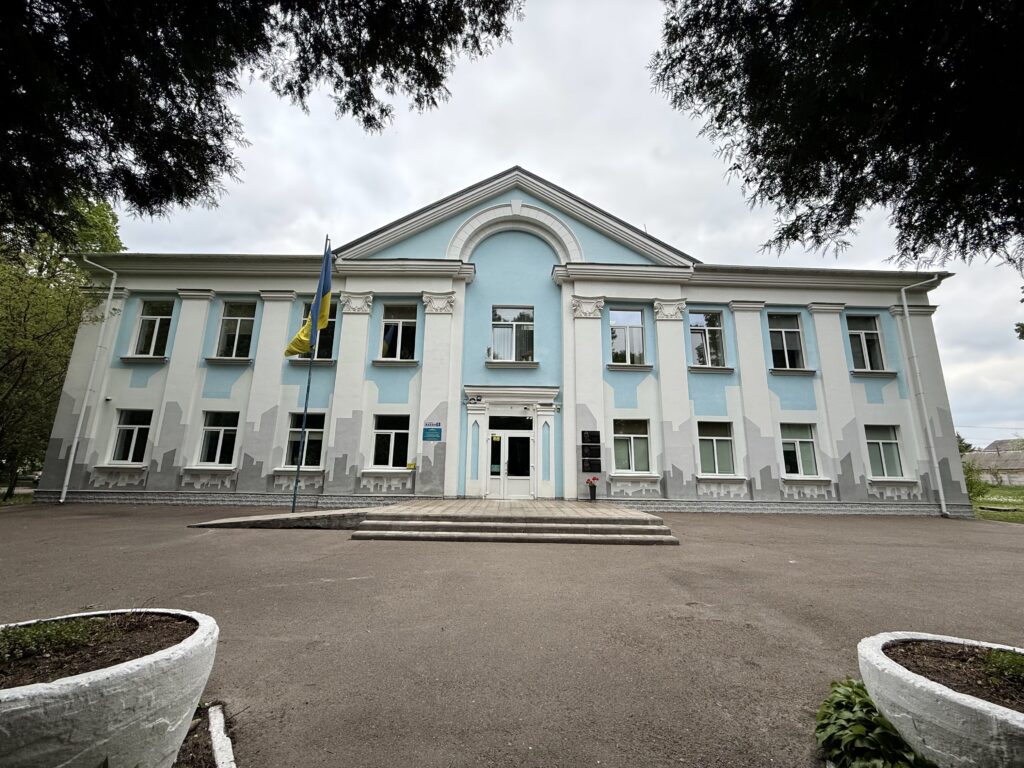
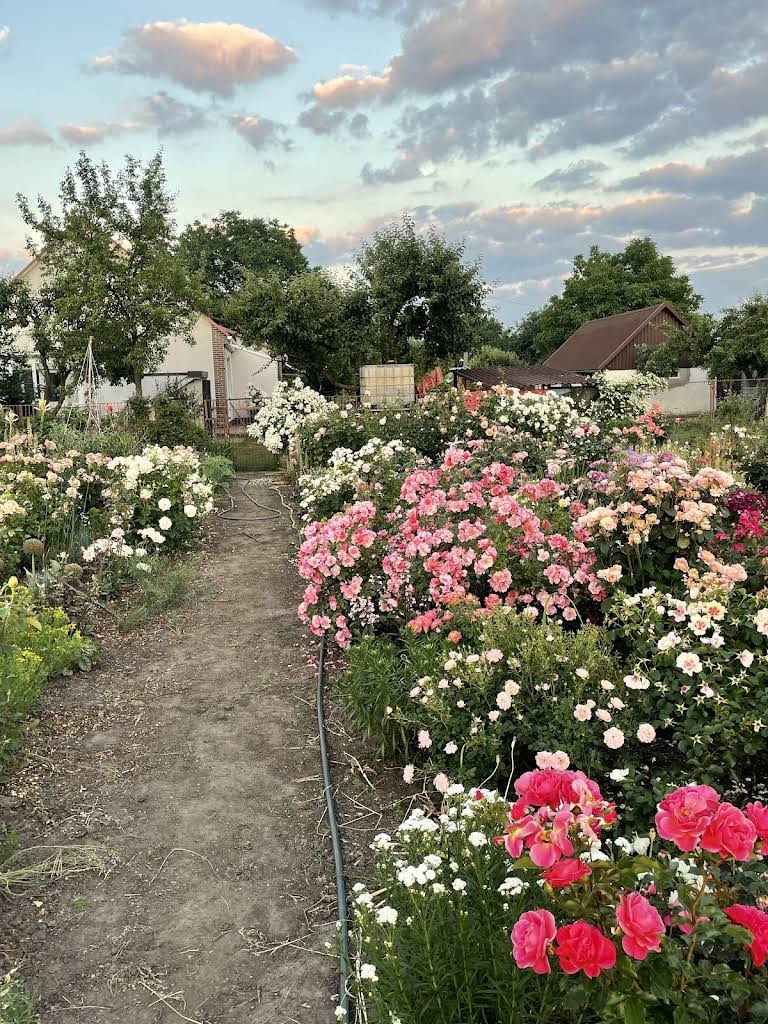
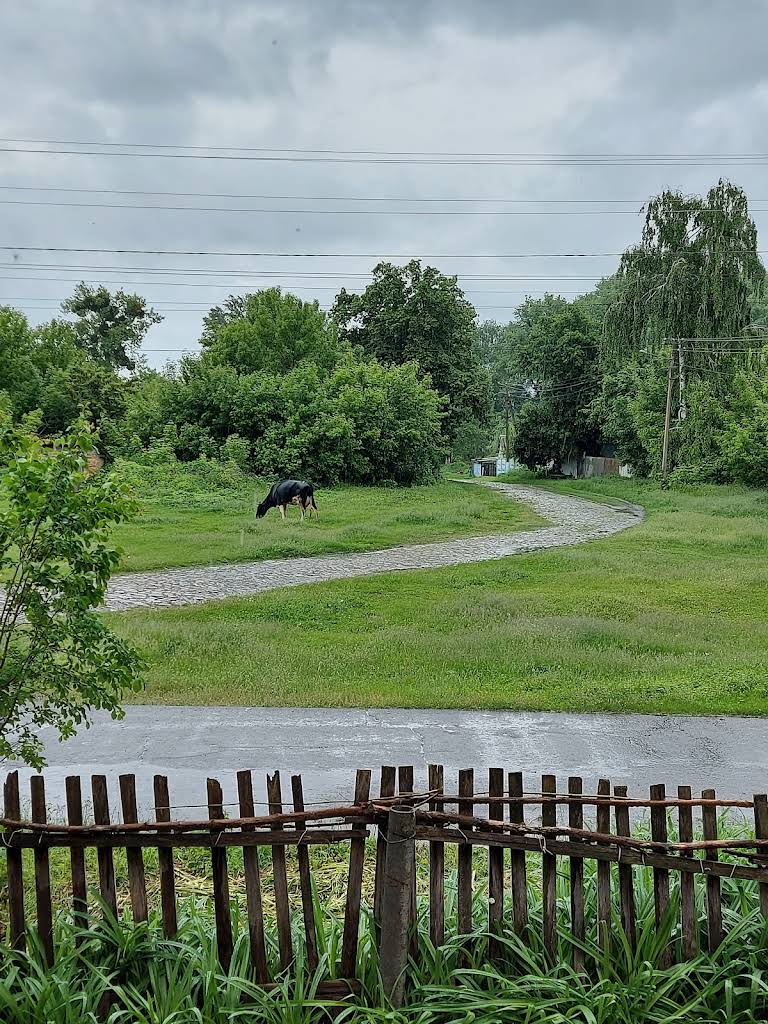
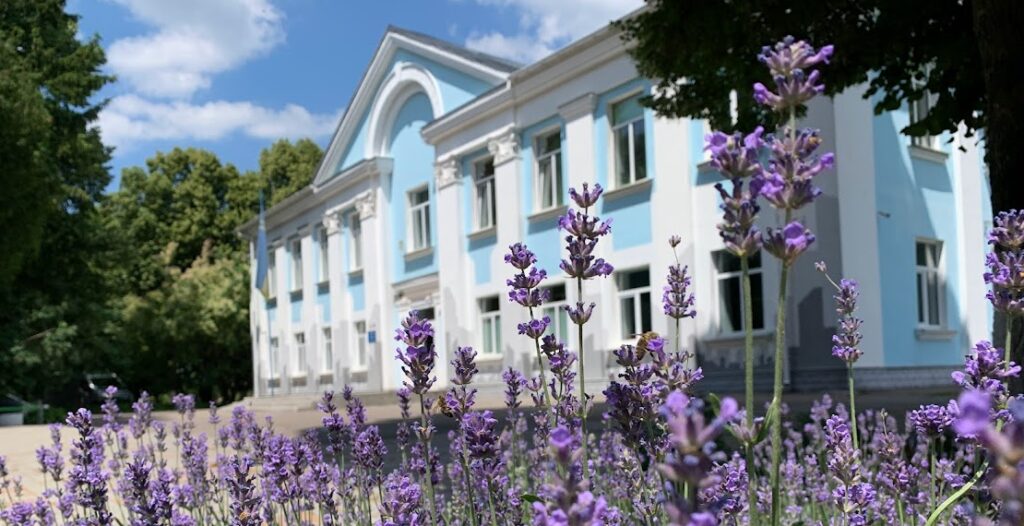
If you open Hrebinka on Google Maps and scroll through the photos uploaded by locals or passing travelers, an idyllic picture of Ukrainian village life unfolds before you. There are sprawling, flower-laden orchards, someone’s cow by the road, a stork’s nest on a utility pole, a cobblestone path, and the silhouette of an old sugar factory. And above it all — the thick line of the M05 Kyiv–Odesa highway, slicing the settlement in two. Here, just off the main road, stands a lyceum with over a century of history.
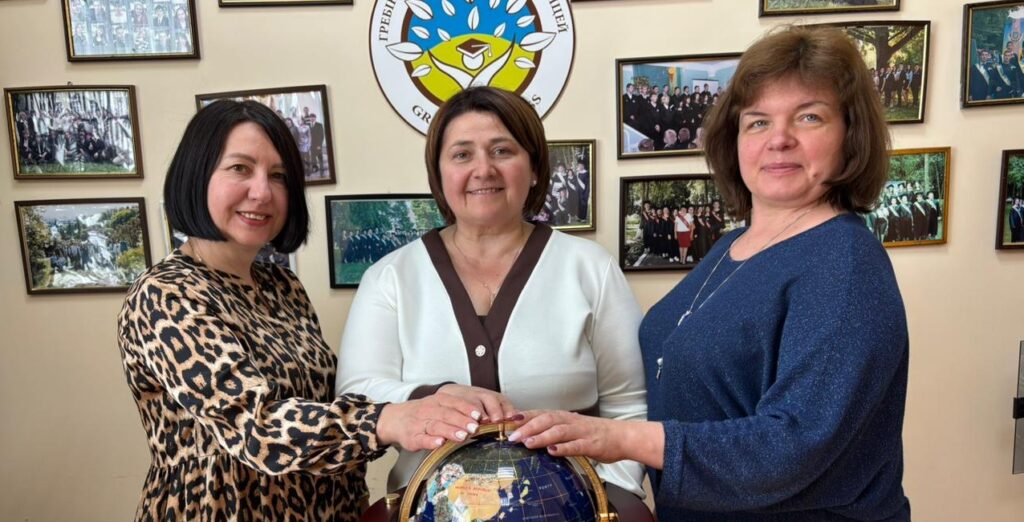
In the office of Hrebinka Academic Lyceum Principal Fokina Yuliia Yuriivna, the door is almost never closed. In fact, there is no separate principal’s office — Yuliia Yuriivna shares the space, and all the challenges of running the lyceum, with her two deputies: Olena Petrivna, who oversees educational programs, and Svitlana Anatoliivna, who handles academic affairs.
On the wall behind Yuliia stands a gallery of graduates in caps and gowns, gazing out with confidence. Under those hopeful, life-ready stares, the three women work every day to help a rural school become a place where children can carve out a successful path into the future.
The office smells of coffee. On the computer screen, bright snapshots of school celebrations scroll past: teachers in a yellow dress code, three-dimensional decorative clouds that melted in the spring rain, and a classroom where educators were up late into the night sewing graduation gowns for eleventh graders. The tradition of dressing students in gowns dates back to the school’s founding, but this year there are a hundred graduates and only forty-six gown sets.
Despite strong results and the full trust of parents, the lyceum’s leadership team had no intention of resting on its achievements — it sensed the time had come to push forward and embrace change. Principal Yuliia explains:
“We realized we needed to inject new blood into the organization. To bring with them a contemporary energy. I have a wonderful team — driven and full of ideas, I’m very lucky with them. Things were going well, but we wanted them to be even better.”
The principal first learned about the Teach For Ukraine through conversations in the community: a neighboring school had taken part in the Teach For Ukraine Fellowship and brought in two early-career teachers. When new people arrive in a small town, everyone hears about it — especially when those people come to teach children.
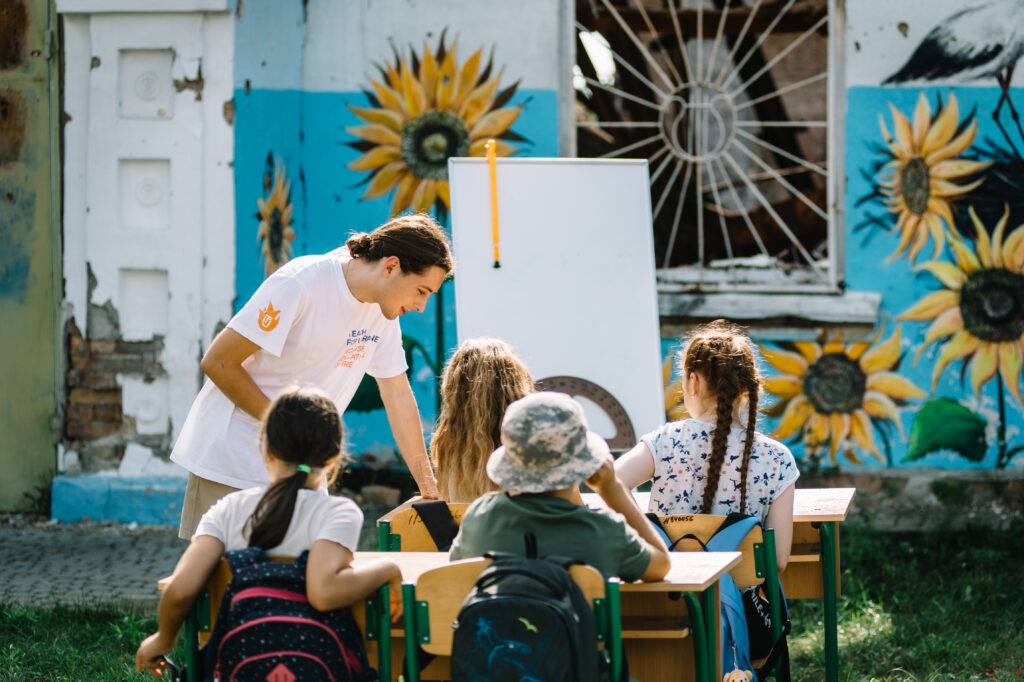
The Teach For Ukraine Fellowship is a leadership development program through teaching. Fellows — recent university graduates and experienced professionals — relocate for one or two years to small towns and villages to teach in local schools and implement their own community projects. They come to strengthen school teams, and in return gain experience in social impact and responsible work that builds leadership competencies.
Everything is built on collaboration: fellows generate ideas, share contemporary approaches, offer a fresh perspective, run projects, teach and learn simultaneously — while the school staff, in turn, supports them, helps bring their ideas to life, and shares years of accumulated experience.
Over the years of the program’s existence, 101 people have become teachers in 54 schools across the country, and more than 25,000 children have gained educators who inspire them. Schools can still apply to join the Teach For Ukraine Fellowship this year.
“We found out about the program, and immediately searched online for the phone number of Olia [ed. Olha Yurchyshyn — Director of School and Community Partnerships at Teach For Ukraine NGO]. We called and said: we need a history teacher. We were very motivated, very interested, and afraid of missing the deadline. We asked a lot of clarifying questions to make sure we’d get into the program.”
The First Teach For Ukraine Fellow in Hrebinka — Who He Is and What a ‘Little Beet in Glasses’ Has to Do with It
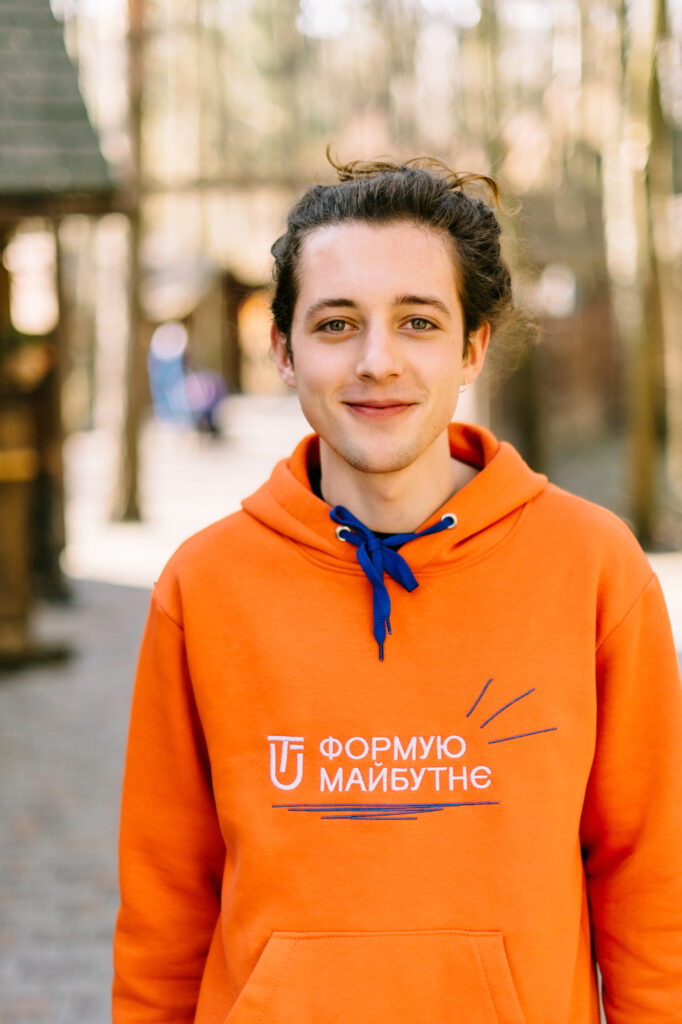
The summer of 2023 proved fruitful for the lyceum: the school connected with the Teach For Ukraine team, was selected for the Teach For Ukraine Fellowship, and signed a memorandum of cooperation. The first Fellow at the Hrebinka Academic Lyceum was Danylo Haidamakha — a historian, blogger, and civic activist.
Like all young participants in the Teach For Ukraine Fellowship, Danylo went through several months of selection and preparation: an application, a subject-knowledge test, an interview with a teaching demonstration, and a six-week Summer Institute where candidates learn to teach in practice.
“We knew a well-known blogger was coming to us. Honestly, back in August we even assembled a creative working group and set ourselves a goal: to make sure that when the teacher arrived at a rural school, he would find it interesting.”
They designed the welcome as a quest. At reception, Danylo found an envelope — inside was a task and a clue pointing to the next destination. There were seven such envelopes in total. The last one led him to the principal’s office, where the team was already waiting with juice and pizza. Danylo arrived with a cameraman — and what had been planned as a warm welcome turned into a small film.
“He lived up to everything we had hoped for. Charismatic, well-read, knowledgeable — Danylo quickly found common ground with the students and drew them into his orbit,” Yuliia recalls.
Danylo came not only to teach history and art. One of the responsibilities of Teach For Ukraine Fellows is to design and implement their own project — an initiative that will remain in the community after the program ends.
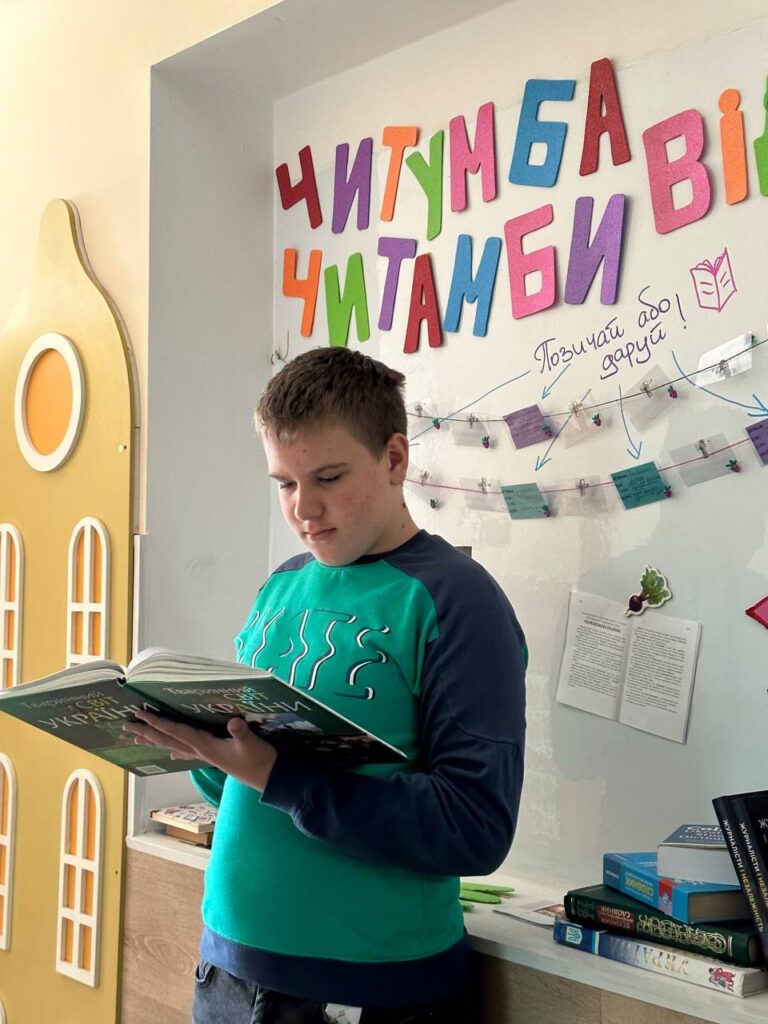
“From his very first day, Danylo explored our libraries. He was troubled by what he saw on the shelves — books by Russian authors. He immediately understood that something had to change. He saw children who loved reading and children who had no interest in books at all — and decided to bring them together.”
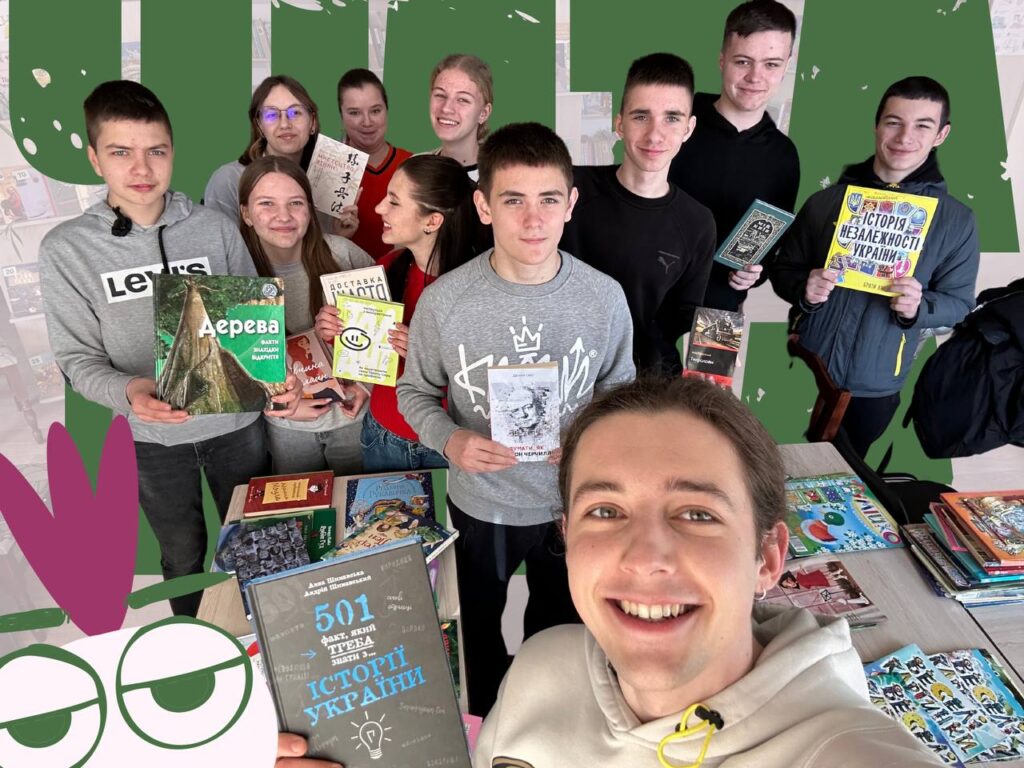
That is how Chytamba was born — a reading festival where children swapped books, wrote reviews, and discovered Ukrainian authors. The festival’s mascot became a little beet in glasses named Chytamba.
Photo from the Telegram channel “Chytamba!” (@chytamba)
“If I had created a project like this, I never would have come up with a beet. But Danylo caught that. In Hrebinka we have a sugar factory. It’s part of our childhood: autumn, sugar-beet trucks loaded to the brim. When the trucks turn — beets fall right onto the road. That’s our childhood, and today’s children know it too. Danylo felt that.”
Under the terms of the Teach For Ukraine Fellowship, participants teach in the community for one or two years. After spending the academic year in Hrebinka as a teacher, Danylo planned his return to Kyiv. Yuliia and her colleagues immediately submitted a new application to the Fellowship — the experience had been so valuable that letting go of it was unthinkable.
The Next Teach For Ukraine Fellowship Story in Hrebinka: How Fellow Olena and Her Students Built a Youth Space and Created Street Art
At the end of August, when the school year is still ahead and summer reluctantly retreats, Yuliia Yuriivna traveled to Kyiv to meet the new Teach For Ukraine Fellow — a future history teacher at Hrebinka Academic Lyceum. The principal came prepared: she had loaded photos of the school, the schoolyard, and the teachers onto her phone — to show what Hrebinka was all about.
Scanning the crowd, she looked into faces — and suddenly locked eyes with one of the Fellows. According to Yuliia Yuriivna, the young woman smiled in a particular way, as if she already knew everything:
“The moment I saw her for the first time, I texted my deputy: a ray of sunshine is coming to us. Because her smile was so luminous. And it still is.”
Olena got there first:
“She walks up and says: I know you. I know everything about Hrebinka, I know where your school is. Everything I had prepared to tell her — she already knew. The year hadn’t even started, and she was already ready.”
Olena turned out to be exactly the kind of person the school had been waiting for — open to collaboration, ready to share and learn at the same time. Yuliia Yuriivna recalls:
“At the staff meeting, Olena presented a digital game to us and her colleagues, shared case studies, offered ideas. Her work, in the end, is not just about lessons. It’s about communication, about life, about project-based learning. That is what makes our school a living community hub.”
Together with her students, Olena set about creating something Hrebinka had never had before — a comfortable, safe youth space. The community had simply nowhere for young people to spend their leisure time meaningfully. The vision was a place for film and reading clubs, art exhibitions, and various workshops.
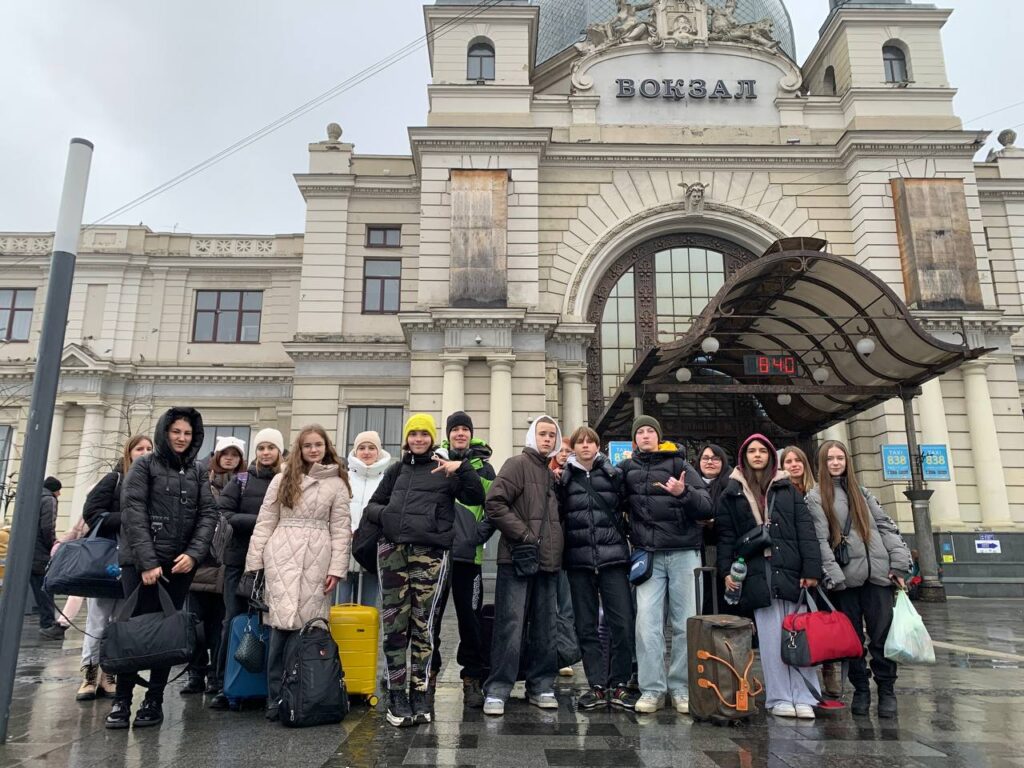
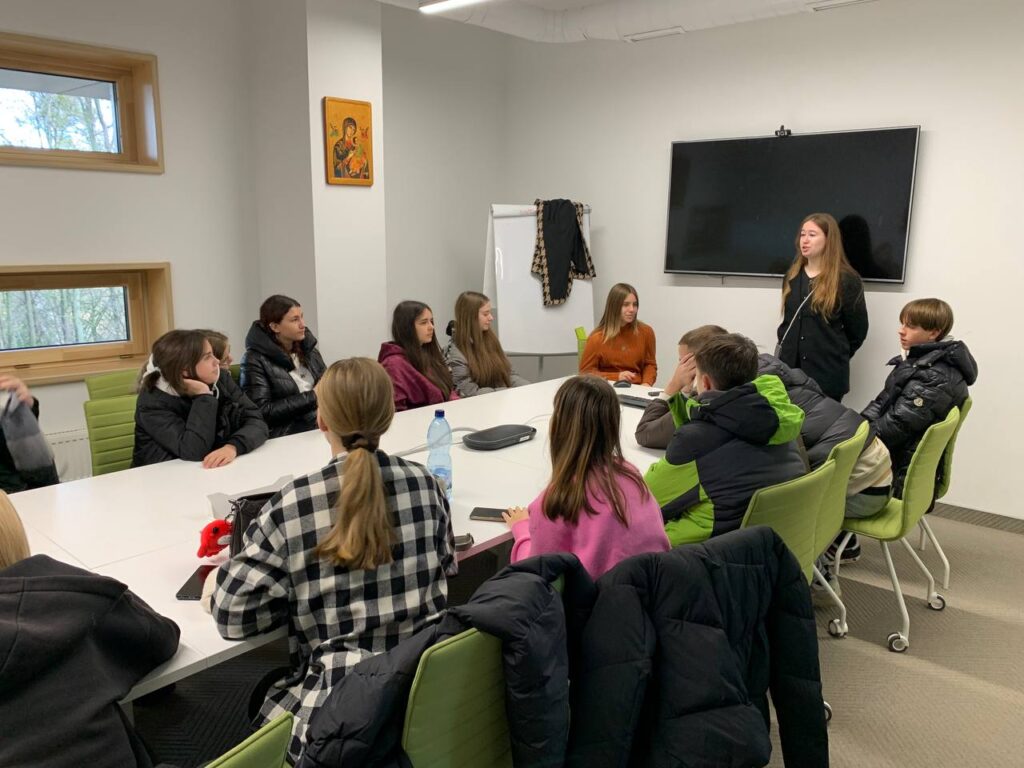
The first phase of Olena’s project was a study of existing youth spaces. The trip to Lviv, funded by a grant from the Teach For Ukraine NGO, was planned entirely by Olena and her students themselves. They visited the Ukrainian Catholic University, Jam Factory Art Center, and the Lviv Municipal Art Center, and upon returning set to work on a concept, presented their ideas to the local community and authorities, and found a venue — an old library.
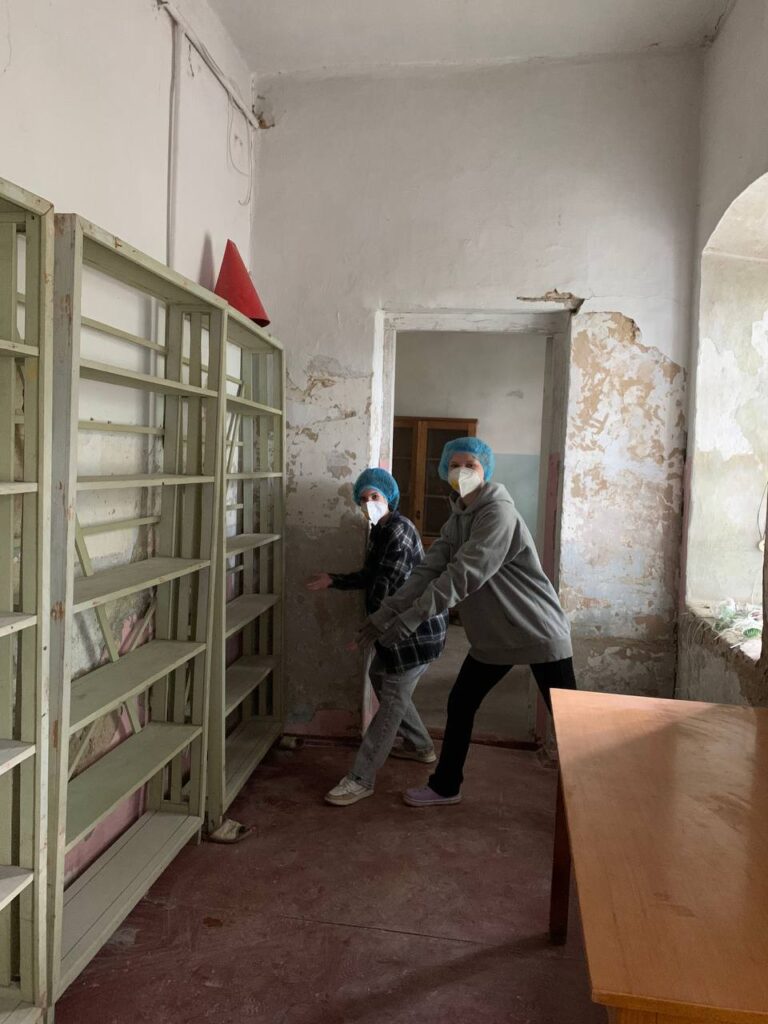
“For nearly half a year, from March through August, we renovated it ourselves, to the extent we could,” Olena says. “After that, it became possible to host film evenings, board game nights, and workshops. Project participants developed their communication skills, teamwork, self-awareness, and understanding of their own potential.”
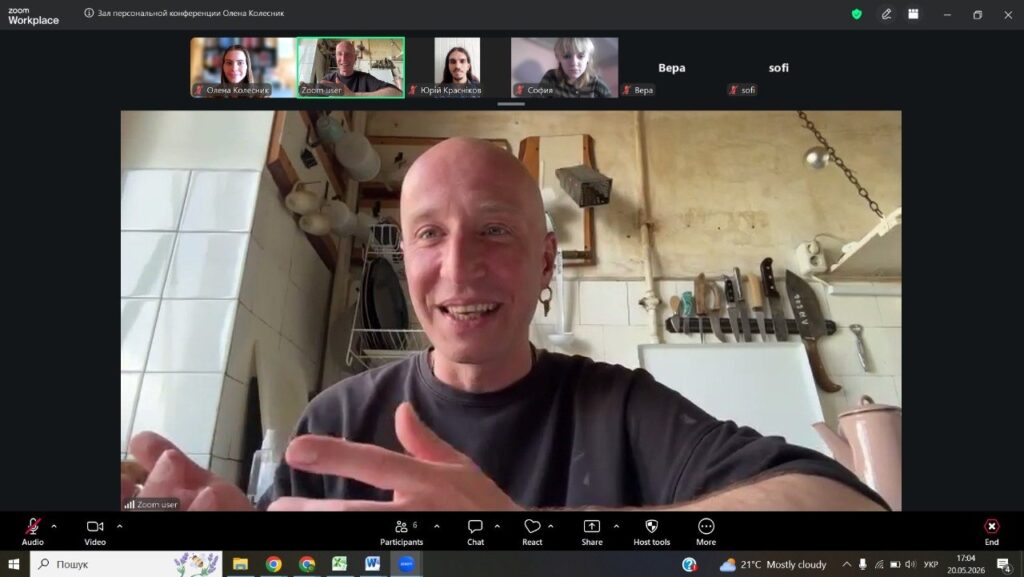
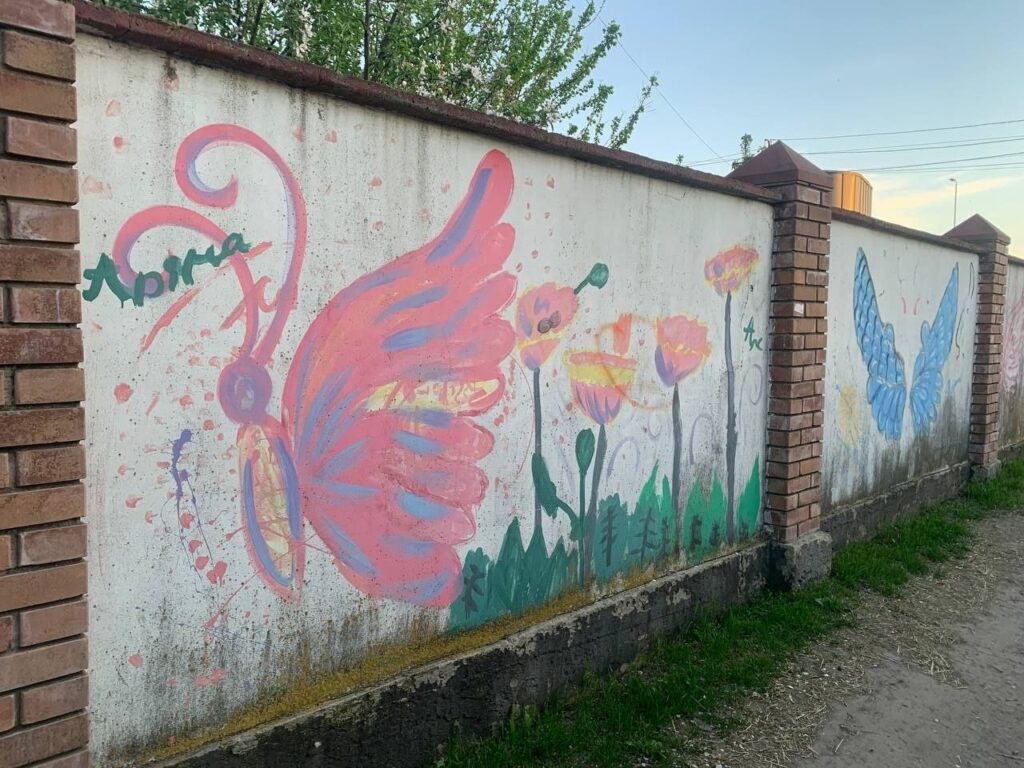
At the same time, Olena and her students are working on another project — a street art chronicle of Hrebinka marking the settlement’s 415th anniversary. On a concrete fence in the town center, murals depicting key events from local history will appear — for everyone who passes by each day and pauses, if only for a moment, to look. To prepare, the group organized an online meeting with Ukrainian street artist Hamlet Zinkivskyi — some drew inspiration, others took away practical advice, and student Sofiia, who dreams of becoming an artist, took one more step in the right direction. The team is currently working on the sketch that will eventually be transferred to the fence.
Meeting with Ukrainian street artist Hamlet Zinkivskyi
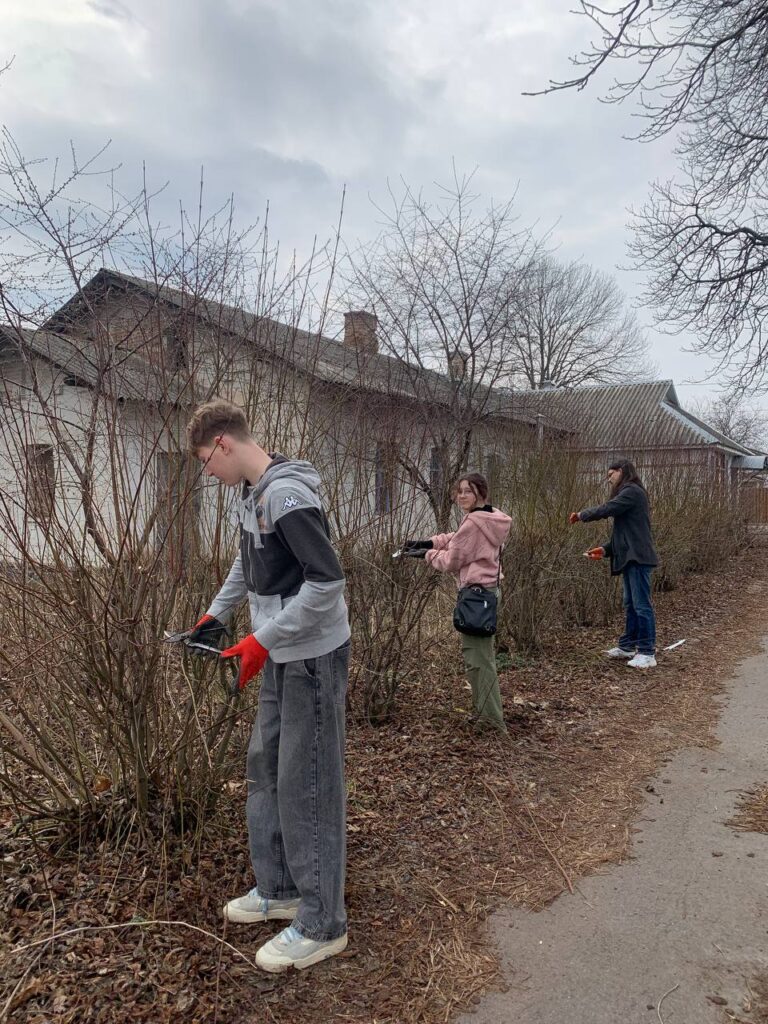
The fence the children will be working on
Olena’s two years of teaching in Hrebinka have come to an end. Over that time, the lyceum has only become more convinced: teenagers are genuinely passionate about creating things of their own, designing and transforming the space around them — when the right people are there alongside them, with the time and resources to do it together. Yuliia is deeply invested in seeing these efforts succeed, and makes no secret of it: what Olena has built with the students is precisely why the school once took the risk of opening its classrooms to young newcomers:
“Olena brought the children together, and they accomplished a great deal. As project leader, she put in enormous effort — and the children saw that. I really want these projects to keep growing. Because, for instance, a youth space like this simply didn’t exist in Hrebinka before.”
“Not Alone in the Fight for the Future”: Why the Lyceum Keeps Applying to the Teach For Ukraine Fellowship
The school year in Ukraine has ended. This May, Russian forces heavily shelled Kyiv Oblast with drones, ballistic missiles, and cruise missiles. In the air there is the noticeable scent of blooming acacia — and the quiet anxiety of an unspoken question in every household: what will this summer hold for our children?
Not knowing whether we will spend the next night in a shelter or in our own beds, we plan for the future in spite of everything. Yuliia and her colleagues are filling out a new application to the Teach For Ukraine Fellowship — so that next school year, another young person will come to Hrebinka Academic Lyceum, ready to teach, inspire, and create something new alongside the children.
In an experience that should never have happened to us or our children — one that is unbearably difficult and frightening, in which we worry for hundreds of small lives — this is an extraordinary act. But it is precisely this stubborn focus on children that, in the principal’s words, restores our sense of purpose.
“Our partnership with Teach For Ukraine gives us confidence that we are not alone in the fight for our children’s future,” Yuliia concludes. “We are in this together — with one shared goal.”