News
News

1 October, 2026
RESTORING A SAFE SPACE: HOW PETRIVSKYI LYCEUM OVERCOMES THE AFTERMATH OF SHELLING AND PRESERVES LEARNING
On a Saturday morning, the halls of Petrivskyi Lyceum were filled with life. Children debated, refined their arguments, and gathered for photos following a “Debate Start” competition. But by evening, shattered glass littered the classrooms, and fragmentation marks scarred the building’s walls and facade. The school – vibrant with activity only hours earlier – was left partially unfit for learning.
On September 19, the village of Stari Petrivtsi in the Kyiv region came under Russian attack. The blast wave and shrapnel severely damaged the main building of Petrivskyi Lyceum, shattering windows, gutting classrooms, and damaging a school bus. The strike caused human casualties, killing a local teenager who was passing by the school alongside his mother when the explosion hit.

29 September, 2026
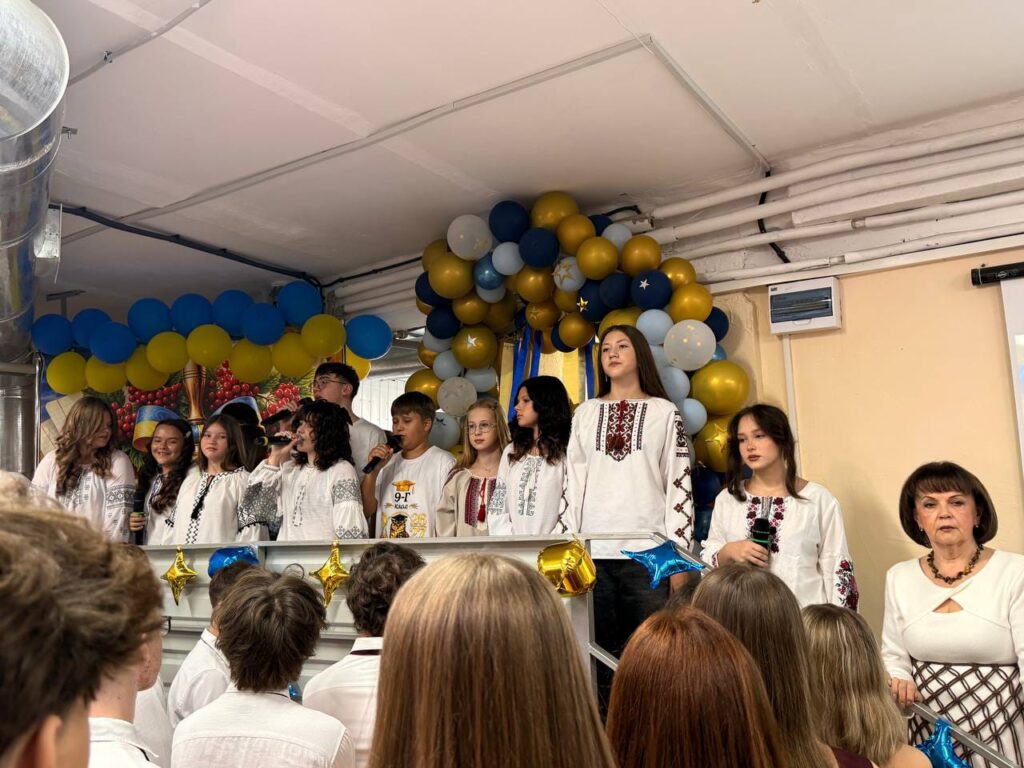
Learning Losses in Primary School: Teach For Ukraine Launches a New Area of Work
Primary school gives a child the tools for exploring the world and lifelong learning. First, students learn to read, and later, in middle and high school, they read to learn. If students do not master reading comprehension in the early grades, it inevitably leads to difficulties in learning mathematics and natural sciences.
16 September, 2026
Back to School Amid Escalating Russian Bombardment: Insights from Teach For Ukraine Fellows
“We had been eagerly looking forward to the start of the school year at our new school. We couldn’t wait to get to know our students, teach engaging, interactive lessons, and see the children return to a full and vibrant school life. But once again, reality shattered all our hopes.

10 September, 2026
Resilience Without Recovery: What the PISA-2025 Results Reveal
The PISA-2025 results have shown that despite the full-scale war, Ukrainian teenagers managed to maintain their educational performance at approximately the 2022 level. However, the problems remain severe: depending on the subject, between 35% and 46% of students lack basic knowledge and skills, and the gap between students from large cities and villages is equivalent to about three years of schooling. At the same time, the majority of teenagers believe that abilities can be developed, and they use artificial intelligence for learning more often than their peers in OECD countries.


Our Research
29 September, 2026
Learning Losses in Primary School: Teach For Ukraine Launches a New Area of Work
Primary school gives a child the tools for exploring the world and lifelong learning. First, students learn to read, and later, in middle and high school, they read to learn. If students do not master reading comprehension in the early grades, it inevitably leads to difficulties in learning mathematics and natural sciences.
8 July, 2026
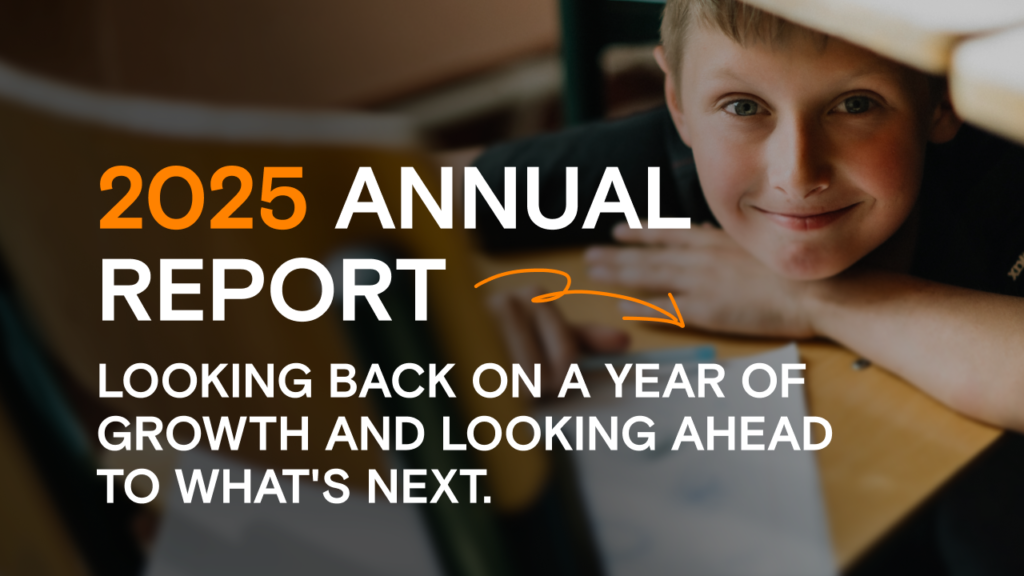
A Year of Transformation. Looking back on a year of growth and looking ahead to what’s next
As Ukrainian children continued learning through another year of war, Teach For Ukraine worked not only to meet today's urgent needs, but also to help shape the future of education in Ukraine.
Throughout 2025, we supported children in recovering learning loss, empowered teachers, and developed the next generation of education leaders. But this year also marked an important shift in our own journey. We began transforming solutions developed through our work in schools and communities into evidence, partnerships, and national initiatives that can strengthen Ukraine's education system well beyond the reach of our own programmes.
This report looks back on a year of growth, partnership, and system change. It highlights the progress we've made together and the priorities that will guide our work in the year ahead.

20 February, 2026
Learning amid disruption: a feasible, effective, and scalable investment in education during wartime
This blog about the world’s first wartime randomized controlled trial, conducted by Teach For Ukraine in partnership with the World Bank, was written by Lelys Dinarte-Diaz, a research economist in the Human Development Team of the World Bank’s Development Research Group, in co-authorship with Renata Lemos, James Gresham, Rony Rodríguez-Ramírez, and Harry A. Patrinos.

20 January, 2026
LEARNING DURING WAR: HOW STRESS AFFECTS ADOLESCENTS’ ATTENTION, MEMORY, AND MOTIVATION. A study by Teach For Ukraine on the impact of adolescents’ mental health on learning
Educational losses among Ukrainian adolescents are shaped not only by disruptions to the learning process, but also by stress, anxiety, and emotional exhaustion. This is evidenced by the findings of the study “Well-being and Learning of Adolescents in Wartime.”


Blog
16 September, 2026
Back to School Amid Escalating Russian Bombardment: Insights from Teach For Ukraine Fellows
“We had been eagerly looking forward to the start of the school year at our new school. We couldn’t wait to get to know our students, teach engaging, interactive lessons, and see the children return to a full and vibrant school life. But once again, reality shattered all our hopes.

9 April, 2026
“Because a school is its people. And as long as there are people, there is hope.” An op-ed by Yuliia Skrypnyk, Coordinator of the Ambassadors Team of the “Impulse” Program
My name is Yuliia Skrypnyk, and I have devoted 18 years to a profession I truly love. I live and work in a frontline community, 35–40 kilometers from active hostilities.

29 March, 2026
A Journey from Vern the Penguin: How Advent Calendar Winners Visited Kyiv
For a group of schoolchildren from the frontline city of Nikopol, a “golden ticket” from the educational Advent calendar created by Teach For Ukraine turned into a real journey — and a rare chance to experience life beyond constant danger, if only for a few days. Today, we share what learning looks like in frontline Nikopol, in the Dnipropetrovsk region, and reflect on the children’s recent trip to Kyiv.

16 March, 2026
Memes and paint: how teenagers in Liubotyn are talking to their peers about emotions
Memes about emotions, carousel posts with tips on support, and art workshops for younger students — this is how teenagers in Liubotyn, Kharkiv region, are talking to their peers about mental health.
The team of ambassadors, formed as part of the Impulse program by Teach For Ukraine, combines online content with offline activities to support their peers.