Educational losses among Ukrainian adolescents are shaped not only by disruptions to the learning process—such as remote schooling or classes missed due to air raid alerts and shelling. Young people’s ability to learn is also profoundly affected by their psycho-emotional state. Chronic stress, anxiety, and emotional exhaustion impair attention, memory, and concentration. As a result, 41% of adolescents report difficulties with concentration, while at the same time 44% demonstrate a high level of intrinsic motivation to learn.
These findings come from the study “ADOLESCENTS’
WELL-BEING AND LEARNING IN WARTIME” conducted by Teach For Ukraine in partnership with the research agency Fama as part of the Multi-Year Resilience Programme 2024–2026 (MYRP). The programme is funded by Education Cannot Wait (ECW) and implemented with the support of the Ministry of Education and Science of Ukraine.
LEARNING DURING WAR: HOW STRESS AFFECTS ADOLESCENTS’ ATTENTION, MEMORY, AND MOTIVATION. A study by Teach For Ukraine on the impact of adolescents’ mental health on learning
 20 january, 2026
ГО «Навчай для України»


The study involved 3,415 adolescents aged 14–16, as well as parents, teachers, and school psychologists from eight frontline regions of Ukraine: Dnipropetrovsk, Zaporizhzhia, Kyiv, Mykolaiv, Sumy, Kharkiv, Kherson, and Chernihiv. By combining quantitative and qualitative methods, the research provided a comprehensive picture of how war affects adolescents’ emotional well-being and their capacity to learn.
of adolescents display signs of psychological distress


— depressive symptoms

— anxiety symptoms


— stress symptoms


Although most adolescents remain within the clinical norm, they consistently report fatigue, anxiety, and emotional tension that accumulates over time and reduces their capacity to recover. This condition directly affects cognitive processes that are critical for learning. Difficulties with concentration were reported by 41% of adolescents, memory problems by 40%, and challenges with thinking by 34%. More than two-thirds of respondents experience problems with retaining and recalling information.

“Even when adolescents are motivated, they often cannot fully engage in learning because they lack the internal psychological resources,” explains Kseniia Kalyna, Project Manager at Teach For Ukraine.
These data suggest that most adolescents want to learn but lack sufficient psychological resources, support, and a sense of safety.
of respondents demonstrate a high level of intrinsic motivation to learn,
are driven by extrinsic motivation
are in a state of amotivation
Overall, trust in adults at school remains critically low: only 1% of adolescents identified school adults as significant sources of support. Parents remain the primary source of emotional support for 44% of respondents, followed by friends and peers (24%). School psychologists note that adolescents are often able to support one another, especially in crisis situations—finding the right words and listening attentively to their friends.
Adolescents emphasize their need for empathy, shared experience, and accessible help without formality or fear of judgment. This helps explain the strong potential of the peer-to-peer approach, which the study identifies as one of the most acceptable and effective ways to address mental health in school settings.
“Our data show that educational losses cannot be addressed without considering adolescents’ psycho-emotional state. One in five already requires additional psychological support, and most face cognitive difficulties. Without responding to these challenges, learning cannot be stable,” Kseniia Kalyna explains. “At the same time, the study shows that 65% of adolescents have not lost their desire to grow and develop despite the war. Their main sources of support remain family and friends, while schools often fail to function as spaces of emotional safety. This means that mental health support is not an addition to education—it is a necessary condition for its recovery and resilience.”
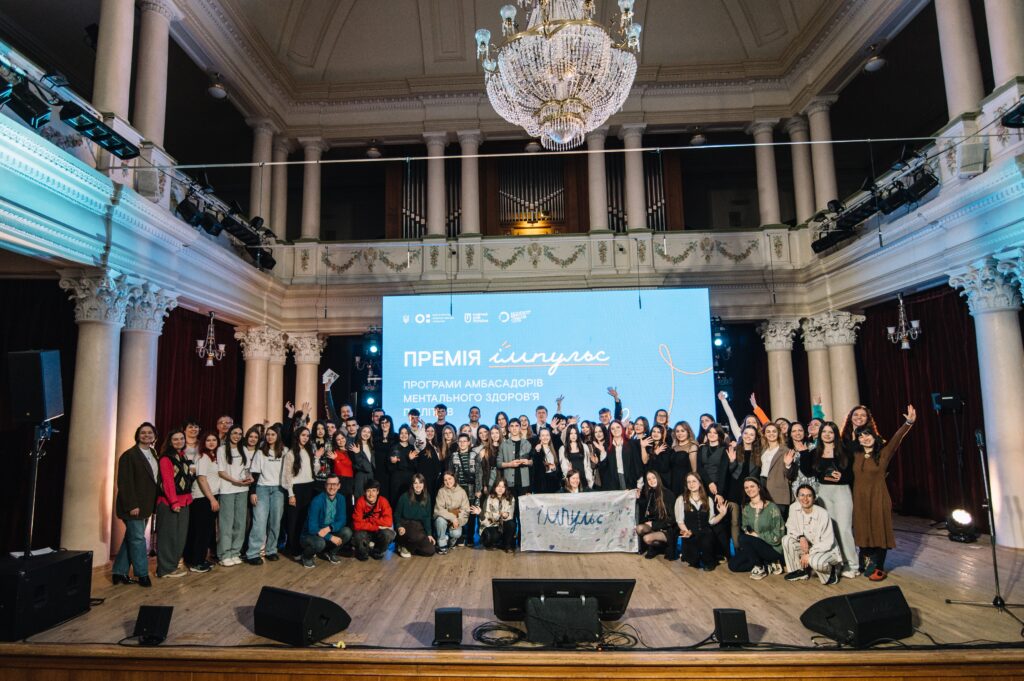
Teach For Ukraine, which conducted the study “Well-being and Learning of Adolescents in Wartime,” has also launched the Impulse programme. The initiative focuses on adolescents’ mental health in school environments and is based on a peer-to-peer approach. Currently, the programme operates through 10 school teams, involving 50 adolescent mental health ambassadors and 10 teacher-coordinators.
ADOLESCENTS’ WELL-BEING AND LEARNING IN WARTIME