Due to the full-scale war, many Ukrainian schoolchildren have faced unstable and fragmented learning. Some experienced abrupt shifts between online and offline schooling, while others are still forced to study entirely online, often far from their schools. Fifth graders, in particular, have felt the impact most acutely. Instead of a confident transition from primary to middle school, many struggle with basic knowledge gaps, difficulties in reading, confusion with simple tasks, and a lack of confidence to participate in lessons or interact with peers due to limited socialization during online learning.
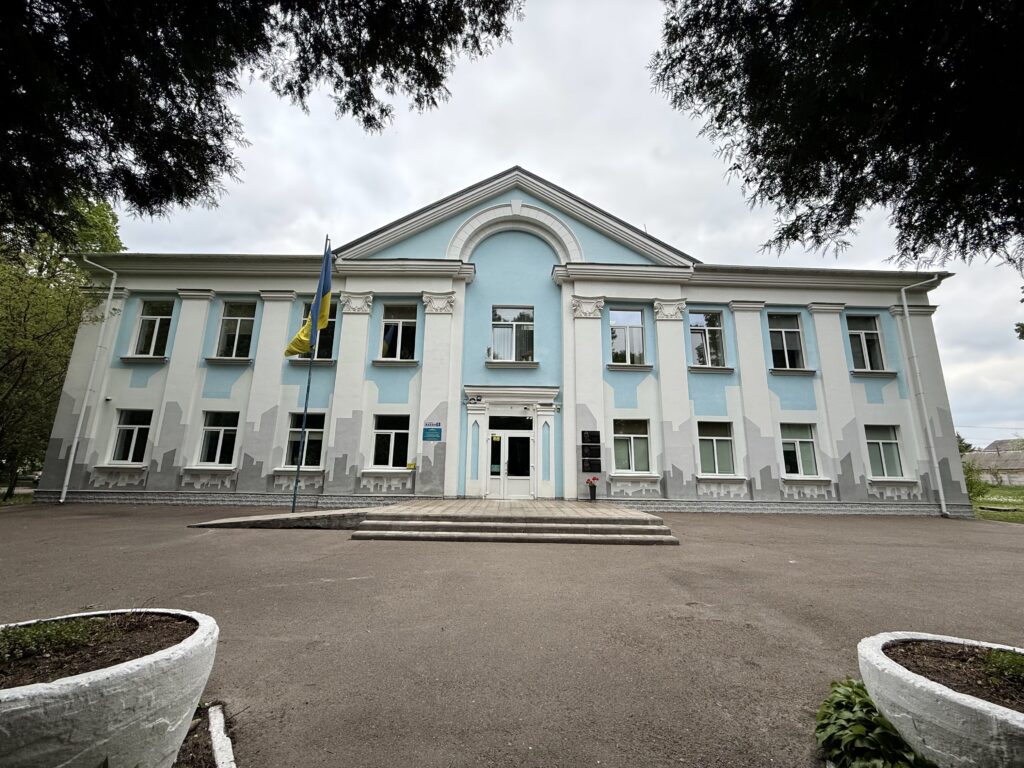
At Fontanske Lyceum in the Odesa region, history teacher Kateryna Zakharochkina, as part of the NGO Teach For Ukraine project “Tutoring Catch-Up Centres: Overcoming Learning Losses in Emergencies”, supported her students through a three-week intensive program aimed at bridging these gaps.
Kateryna teaches Ukrainian history and civic education, but within the catch-up project she worked specifically with fifth graders. These were students who themselves wanted to improve their knowledge and gain a deeper understanding of the subject. According to Kateryna, the extracurricular sessions not only helped fill academic gaps but also became a safe space where children could communicate, open up, and regain confidence in their own abilities.
More about the challenge of learning losses, the experience of catch-up sessions, and their impact on children in a rural school — read below.
Learning losses at the school where Kateryna works are not just numbers in a report—they are part of everyday reality that she faces with her students.
“Children are very tired now. For many of them, this exhaustion has already grown into chronic anxiety,” Kateryna shares. She recalls one of her students from the catch-up sessions: the boy often couldn’t sleep at night because of constant air-raid sirens, was highly anxious, and at one point had to move to his grandmother’s village, where it was quieter and safer. That was the only way to provide him with at least minimal comfort and ensure he could continue learning afterward.
In such conditions, air raids become a serious barrier to quality learning and keeping up with the curriculum. After nights with prolonged alerts or shelling, students come to school exhausted—or sometimes don’t come at all. When a siren sounds during a lesson—which happens regularly—the children get upset, especially if an engaging new topic has just begun. They don’t want to go down to the shelter because they know: it won’t be five minutes, but sometimes the entire lesson or even longer.
“There were times when the alarm lasted for three lessons in a row,” Kateryna recalls. “If during that time we had to cover a really important topic, I always returned to it later—because I knew students wouldn’t be able to grasp it on their own at home. On the other hand, less critical topics we would just review briefly, or I would ask them to read the section independently.” According to her, self-study at home during air raids or remote days rarely brings the same result as classroom learning. The main reason is the varied levels of preparedness: some can manage on their own, while others don’t understand what exactly needs to be done—or simply lack the resources.
Learning losses show up not only as gaps in knowledge but also in basic skills, such as reading and critical thinking—without which further learning is impossible. Middle school students often struggle even to understand the wording of tasks that require simple calculations or logical reasoning. For instance, a problem like subtracting one date from another or calculating how much time has passed since a historical event can be challenging even for high schoolers.


Why Regular Lessons Are Not Enough to Overcome Learning Gaps
During regular school lessons, there is critically little time for in-depth explanations and revision. Teachers are forced to follow the curriculum pace—even when students struggle to grasp new material. According to Kateryna, in such conditions, extra sessions become the only way to revisit the basics—things that should have been mastered years earlier.
“Our goal was clear: teach the foundations that will definitely be useful in the future. Until those are secure, we don’t move forward,” she explains.
“One of the biggest problems is that the curriculum doesn’t account for students’ individual learning speeds,” Kateryna adds. “I teach four parallel fifth-grade classes. One of them picks up the material very quickly, while another needs much more time and finds it really difficult. But instead of stopping to go over the hard parts, we are forced to keep moving, because we ‘have to cover the program.’”
In a 45-minute lesson, students are expected to grasp several concepts at once—for example, defining centuries, solving historical problems, and practicing chronological exercises. Under such conditions, there is no time for practice or confident mastery. “That’s why in the catch-up sessions, we could spend several meetings on just one topic: playing games, doing exercises, reinforcing skills. And only then did results appear. In regular lessons, you explain something—and then the bell rings, and it’s over. Homework doesn’t help if children don’t even understand what exactly they are supposed to do,” Kateryna sums up.
“During the teacher trainings provided by Teach For Ukraine, my colleagues and I received a lot of practical tools that I immediately started applying in my classes,” she continues. “I really appreciated that the focus wasn’t only on teaching methods and working with children, but also on the teacher’s own well-being—how we can recharge and take care of ourselves. And what’s more, we tested every tool on ourselves first, which helped us better understand how students might react during lessons.”

At the end of the school year, in early June, the project launched summer learning intensives at the school—catch-up sessions that combined subject support with tutoring hours. The program scheduled 31 sessions in total, 7 of which were dedicated to tutoring, helping children talk about their emotions, reduce stress, and regain a sense of safety. But in practice, Kateryna says, the lines between formal and informal learning quickly blurred.
“We always started with something simple: asking how they were doing, how their night had been. After the air raids, children came in tired, but they didn’t want to skip classes. They would say: ‘I’m interested, I want to be here,’” recalls the teacher. “We worked through subjects, did practical exercises, played games. There were always short physical activity breaks with popular music, tests, and QR-code-based interactives—the kids loved those.”
The tutoring hours held a special place—conversations about stress, self-worth, talents, and support. During these sessions, as students explored themselves and their reactions to different situations, they began opening up more and sharing experiences they normally kept to themselves. What was equally important, the children had the chance to recognize their strengths and uniqueness.
“One very quiet girl had never spoken about her talents. But during a session on self-worth, she suddenly shared that she draws and edits videos. The class was amazed, encouraged her—and she lit up. It was truly moving. I could see how these children, who often feel lost, received recognition, attention, and belief in themselves.”
The sessions impacted not only academic skills but also the classroom atmosphere. According to Kateryna, this was when new friendships began to form. Children who had barely spoken before found common interests and discovered new sides of one another.
“One of my students—very shy, with few friends—revealed she edits videos and draws. A classmate who was into the same thing was thrilled. They started talking, exchanged contacts, created projects together. Others joined too—asking to see her drawings, giving compliments, sharing their own interests.” These sessions not only helped children get to know each other better but also see their teacher as someone they could trust.
“One tutoring session we held as a tea party. We spread a mat, sat in a circle, and I suggested we talk about stress. At first the children hesitated—saying they didn’t really feel anything. But after half an hour, the conversation opened up, and they began sharing what truly worried them. We stayed much longer than a lesson usually allows. Nobody wanted to leave.”
“We even had a TikTok video day. The kids were thrilled, sending me videos in the evening and asking when we would do it again. Parents wrote to me too—thanking me because their children were so eager to attend!”
These few weeks gave students much more than just academic knowledge. They brought a sense of belonging, acceptance, and importance—and that is one of the strongest foundations for a meaningful learning process.


During subject lessons, students remembered game-based learning the most—especially interactive tests and exercises via QR codes from the Teach For Ukraine guide.
“One girl waited for the QR codes every lesson. She would ask at the door: ‘Are we doing something with the code today?’” recalls the teacher. According to her, game-based tools have a positive effect because they reduce tension: “In a regular lesson, answering questions is stressful. A child might know the material but gets nervous, confused, or fears a bad grade. In a game, they just play. And even if they make a mistake, they immediately want to try again.”
These tools don’t just make learning more engaging—they help students retain the material better. “After making a mistake, the child wants to go through the task again—and the next time, they do it correctly. This works better than a regular quiz.”
For the final lesson, the history teacher decided to step away from the usual knowledge checks and created her own board game. The main idea was to turn the final class into an engaging, dynamic event that also allowed her to assess what students had learned throughout the course.
“I wanted to combine knowledge assessment with an element of play. So that the children wouldn’t just sit in place but move around, play, and at the same time recall what we had covered. In a traditional quiz, they often get anxious or lose interest. Here, they didn’t even immediately realize it was a test,” explains the teacher.
She designed the game the day before the lesson: creating a large colorful board, 3D pieces, character figures, and tickets—all handmade. The topics studied throughout the year became part of the game: Princess Olga, the Cossacks, key dates, and events.
“The students were thrilled. They ran between desks, answered questions, helped each other, and laughed. I observed and understood who remembered what. It was reflection, learning, and assessment all at once—without pressure, without fear. This format brings enjoyment and deepens knowledge retention.”

All catch-up learning materials used in the project are openly available to any teacher. They can be found on the Teach For Ukraine website, downloaded, adapted to local contexts, and applied during additional lessons, regular school lessons, volunteer initiatives, or tutoring hours.
“Many of my colleagues ask me where these materials come from and whether we really have to prepare everything ourselves. Yes, I do look for extra games or exercises, but the foundation we were provided is an excellent methodological resource. It’s like having a textbook that helps structure the lessons,” the teacher shares.
When asked what they remembered most from the summer intensives, Kateryna Zakharitskina immediately recalled a student who hardly spoke during regular lessons. “He was always silent. He wouldn’t answer, even when I asked him. But here, when we started learning about centuries through games, cards, and exercises, he began raising his hand, answering, shouting, ‘I did it!’ He started to express himself and confidently grasp the topics.”
Kateryna explains that the small group size played an important role: in a class of 15+ students, it’s impossible to give enough attention to everyone. In the catch-up lessons, the group was small—around 8 students. “I could approach each child, give a specific task, wait for the answer, see exactly where the difficulty was, and help them overcome it.”
“Absences only occurred during air alarms or if a child was sick or away for personal reasons. Overall, there were hardly any missed lessons,” she adds.
“We worked through the fifth-grade topics that form the foundation for future learning. If the children hadn’t mastered this material, sixth grade would be much harder. Especially historical tasks and the concept of centuries—they appear everywhere, and it’s important that children know how to work with them. We went over all of this, and now it will be much easier for them in sixth grade,” Kateryna explains.
The results are impressive. Even students who had been doing fairly well in class but had gaps improved noticeably in just three weeks—they are now confident enough to aim for high grades. “The children didn’t just catch up on knowledge—they believed in themselves. They saw what they are capable of. And that’s the most important thing.”
The project is implemented by the NGO “Teach For Ukraine” with the support of the Norwegian Refugee Council (NRC) in Ukraine, funded by Norway.