Lana Chubakha, a national ambassador for Teach for Ukraine, says that children are her superpower. They inspire her to dream bigger and create more—because in every child, she sees limitless potential.
For Lana, being an ambassador isn’t about status — it’s about responsibility and the opportunity to amplify the organization’s values, which bring out the best in children. Her guiding principle is to create positive change and to be present where her energy can make a difference.
We spoke with Lana for nearly two hours, during the long power outages across the country and after her rotation with “Hospitallers,” a volunteer medical battalion. What emerged was a warm, candid conversation about mental health, education, and adolescence in its most inspiring form.
“I believe the world is driven by young people with new visions and new needs.”An interview with Lana Chubakha, Ambassador of Teach for Ukraine
 23 december, 2025
ГО «Навчай для України»


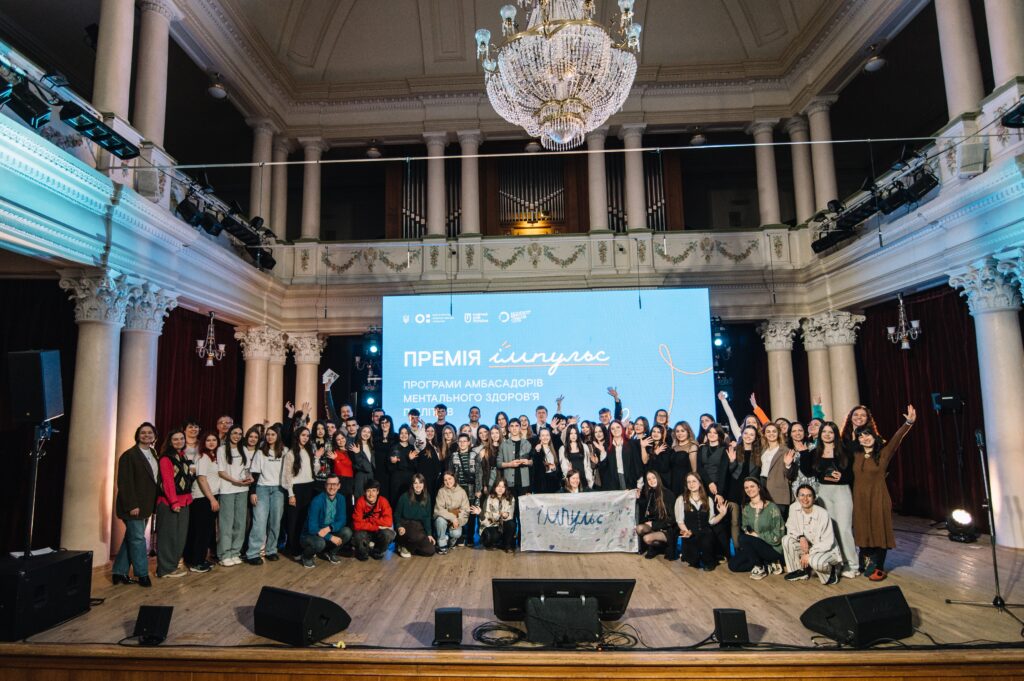
Impulse is a mental health ambassador program for teenagers, where teams of young people from frontline regions create projects that promote mental health awareness among their peers.
It started back in 2021 when I first learned about what was then Teach for Ukraine (now the ‘Teach’ leadership development through teaching program). I was looking for work, new opportunities, and seriously considered joining the program. Family circumstances prevented me from participating at the time, but the idea itself was incredibly inspiring. I was drawn to the fact that people were willing to give their time and resources to something that goes far beyond a job.
I realized that the program isn’t just teaching—it’s a whole way of life, a year-long engagement with everyone involved in the educational process. Beyond teaching, it’s filled with creativity, informal interactions, and community-building. That resonated deeply with me, because I’ve never interacted with students in a strictly teacher-student format. Maybe some would call it unconventional, but I form strong bonds with the children I work with.

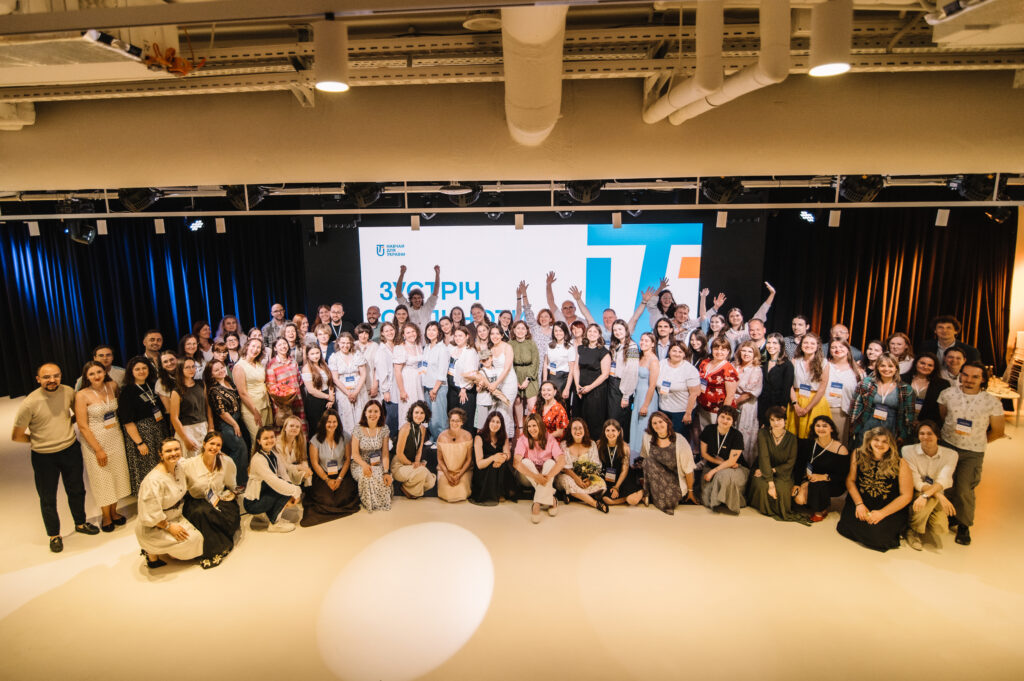
What resonated with me was the focus on mutual exchange: it’s not just us sharing experience — we also learn from the generation we work with. In September, when children arrived at the camp in Lviv from Dnipropetrovsk, Zaporizhzhia, Sumy, Mykolaiv, Kharkiv, Chernihiv, Kherson, and Kyiv regions, some were meeting their classmates in person for the first time due to distance learning. At the camp, I saw truly open, passionate teenagers with ‘fire in their eyes’ — and it was incredibly inspiring.
After the camp, I almost formed an ideal portrait of a modern teen. It felt as though the best children were there—teenagers who already have values, opinions, and a worldview.
They are conscious, empathetic, and know how to communicate—an excellent foundation for developing any skills. I see that they respect each other, value their environment, and support one another. Belonging to a group matters to them—but not just for style or music, as it did in my adolescence—but for ideas, dreams, and the desire to create and make change.
They inspired me and gave me a sense of calm about the future. Sometimes you think about the moment when you won’t be able to actively express yourself due to age or circumstances. Knowing that teenagers are ready to continue this path is a huge relief.
I also love that, despite an outward ‘maturity,’ they still have space for simple childhood joys. It shows their humanity and reminds me that they have so much ahead of them. Being a child isn’t about immaturity—it’s about openness to the world.
I truly believe that the world is driven by young people with new visions and new needs.


Today, I come to the conclusion that our greatest influence on children is by example. Not imitation, but example as a phenomenon, as context. Everything I do—even small things—has a butterfly effect on someone’s life. Working with children makes this very tangible. Sometimes one day is enough, sometimes it takes years. But seeing how they grow, how something changes in them because of you — that gives life immense meaning.
What children are experiencing now, including the impact of war, shapes their future. Their understanding of context, ability to process trauma, and transform it into creativity, projects, and action lays the foundation for future major decisions.
It sometimes frightens me to see children living completely outside the context of the war or the Ukrainian information space. Eventually, this creates a gap in consciousness. That’s why it’s encouraging to see teenagers aware of these realities, making conscious choices. This generation matured early—but precisely because of this, they can become strong.
They will have stories to tell in the future—about what they did, what they felt, how they contributed to social change.


Ideally, education should foster intelligence and cognitive development. Yet, unfortunately, children aren’t always able to develop these qualities within the school environment. For me, education is a major part of life for all involved. It should be as effective and accessible as possible, not a burden. Education carries many roles and responsibilities.
I hope Ukrainian education continues to evolve. There’s currently a sense of inadequacy. I understand our shortcomings, but I want people to take pride in entering Ukrainian universities, for graduates of Ukrainian schools to be proud of their learning. Whether in public, private, or village schools, children everywhere should have access to a sufficient level of knowledge.
I’m impressed by how adaptive the Ukrainian education system is: schools in the Kharkiv metro, lessons in shelters. These aren’t ideal conditions, yet the system adapts over time. People think, ‘What choice do we have? We can’t just give up.’ These challenges are seen as opportunities, which perhaps even gives us an advantage in flexibility.
My previous experience has been in private schools and educational institutions. Speaking broadly about the system, the biggest problem is lack of resources — not only financial, but also tools.
Modern children — Generation Alpha — think differently. They need contemporary tools: teaching materials, technology, gamification, flexible approaches. Teaching only from textbooks and notebooks no longer works. Sometimes schools simply lack physical resources, technology, or materials that ease the learning process — for both children and teachers.
Another challenge is people. Schools need teachers with inner motivation, clear convictions, and willingness to invest. If approached merely as a 9-to-5 job, results will reflect that. But such work demands high emotional and intellectual resources, so burnout is inevitable without support.

For me, the key word in ‘mental health’ is health. It is the foundation of all life. Without physical and mental support, neither individuals nor society can function fully.
In difficult times, people have learned to care for themselves, which is important, but also exhausting. Additional organizations, materials, specialists, and initiatives that offer support are invaluable—they make you feel less alone.
I’m a psychologist, so I understand what affects mental health and how to maintain it. Participating in programs like Impulse is always exciting — they provide new insights and remind us that constant repetition of simple truths — ‘drink water,’ ‘get fresh air’ — is essential.

I love that the program is tailored to age-specific needs, especially adolescence, when the foundations for life are formed. If a child learns early what helps them, what to pay attention to, and what are the ‘critical warning signs,’ they can always take care of themselves and others.
At the camp, I saw communication, body work, intellectual development, and boundary-setting — a massive amount of information. The key is delivery. Trainers and specialists turn dry theory into actionable life hacks that children can use.
Children are the hardest to engage. If you can explain something complex as if the person were three years old, and they understand — you are a true expert. I love being among people who can explain mental health through simple examples.
Honestly, at 13, I didn’t understand mental health at all. We just did things we liked and that made us happy. But not everything that brings euphoria is beneficial. That’s why we now explain, through simple examples, what is effective, healthy, and leads to well-being.
No matter how individual we are, our brains and psyche work the same way—only the models differ.
Teenagers often have more influence within their peer group than adults trying to assert authority. That’s typical for their age. It’s crucial that this authority promotes positive and enlightening ideas.
It works like this: you see a good example, and if it resonates, you follow it. Seeing it among peers is even more inspiring, because teenagers have very strong bonds. They can more easily track their positive impact on each other. It’s an endless loop of energy and joy.
I came back from the camp fully energized. Just as much as I fueled them, they fueled me. They have so much of this ‘fuel’ inside them.