For thousands of Ukrainian students, the war has turned learning into a constant process of adapting to new conditions — some have changed schools several times due to forced relocations, some have lost motivation after long periods of distance learning, and some are still looking for opportunities to catch up on their studies after prolonged anxiety. For children, the only chance to catch up is the opportunity to work on the material independently or with tutors outside of school.
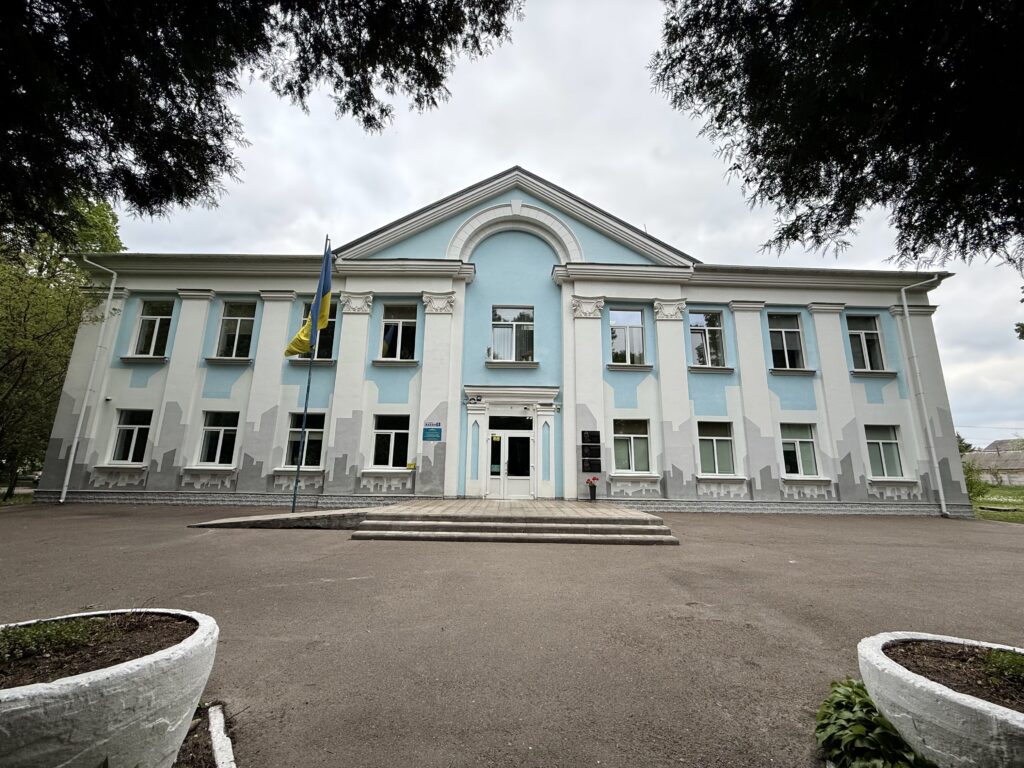
At a school in Odesa region, Ukrainian language and literature teacher Nataliia Yasyishena helps her students catch up on their knowledge and skills as part of the Teach for Ukraine NGO project “Tutoring Catch-Up Centres: Overcoming Learning Losses in Emergencies,” implemented with the assistance of the Norwegian Refugee Council (NRC) in Ukraine and with financial support from Norway.
For Ms. Yasyishena, these classes have become an opportunity to support children in their studies and a space for lively communication — a place where students can be heard, show initiative, and learn to interact after a long period of isolation.
Natalia emphasizes that catching up on knowledge is not just about extra classes, but above all about support and attention to each child. She shares her own experience of how to apply a tutoring approach at school to help students not only fill in gaps in their education, but also rebuild their communication and collaboration skills and their belief in their own abilities.

For thousands of Ukrainian students, the war has turned learning into a constant process of adapting to new conditions — some have changed schools several times due to forced relocations, some have lost motivation after long periods of distance learning, and some are still looking for opportunities to catch up on their studies after prolonged anxiety. For children, the only chance to catch up is the opportunity to work on the material independently or with tutors outside of school.
At a school in Odesa region, Ukrainian language and literature teacher Nataliia Yasyishena helps her students catch up on their knowledge and skills as part of the Teach for Ukraine NGO project “Tutoring catch-up centers: overcoming educational losses in emergency situations,” implemented with the assistance of the Norwegian Refugee Council (NRC) in Ukraine and with financial support from Norway.
For Ms. Yasyishena, these classes have become an opportunity to support children in their studies and a space for lively communication — a place where students can be heard, show initiative, and learn to interact after a long period of isolation.
Natalia emphasizes that catching up on knowledge is not just about extra classes, but above all about support and attention to each child. She shares her own experience of how to apply a tutoring approach at school to help students not only fill in the gaps in their education, but also rebuild their communication and collaboration skills and their belief in their own abilities.

Під час тьюторських занять. Фото надане Наталею Ясишеною
The classes create an environment of trust where every child feels important.
“In a regular class, where there are significantly more students, this is much more difficult to achieve,” says Natalia. “Here, we have the opportunity to see everyone, support them, and help them, and this shows excellent results not only in improving their knowledge of the subject, but also in establishing interaction between students, between me and the children.”
The teacher notes that this also affects attendance at classes to make up for educational losses, even though they take place outside of school hours and are not mandatory for children. The number of students in the classes is consistently high—all nine children have been attending regularly since the beginning of the autumn wave of the project. Only once did this statistic change — and that was only because of the weather, as there was a very heavy downpour on Saturday — only three children came.
“They have become very accustomed to each other thanks to these classes. Although the children are from different classes — seventh A and seventh B — they are now friends and support each other. We even have a tea tradition: they choose for themselves during the first or second break, make themselves tea, bring treats in advance and treat me, and I bake them a cake,” says Natalia.
This informal format helps to create a trusting atmosphere and keep their attention even on difficult topics. “Sometimes I see that the children are tired or tense,” explains the teacher. “Then we devote more time to tutoring, conversations, and support. There is a plan, but the main thing is the children, their condition, and their needs.”

During classes, Ms. Natalia actively uses interactive exercises and short movements that help children maintain concentration and energy. She says that these tools are especially useful when working with students who find it difficult to sit still for long periods of time.
“I have one boy who is very active. He once said, ‘I’m not paying attention.’ And I replied jokingly, ‘No, we all have moments when it’s hard to concentrate. So let’s just add more movement to switch gears,’” the teacher smiles.
At the beginning of each lesson, I use “icebreakers” — exercises that help lighten the mood and get everyone ready to work: “At the beginning of the lesson, children often choose something sleepy — a cat that wants to sleep or an angry character. But at the end of the lesson, it’s the opposite: they’re smiling, active, and full of energy. You can see how their mood and state change by the end.”
“I simply print out a lot of materials from the Better Learning Programme developed by the Norwegian Refugee Council (NRC) and hand them out to the children. There are times when, after shelling, they come to school upset and confused. Then we spend a few minutes doing exercises from these printouts — we talk about fear, about how it’s normal to be afraid, how to find a safe place, how we can support each other. These materials help support children in stressful situations and work with their emotions,” the teacher shares.
Natalia plans to actively use the experience gained during the project and training sessions in the future. She says she is most inspired by the game tasks from the manuals, which help to create not only a trusting atmosphere, but also effectively reinforce the material.
“Icebreakers are my first discovery. In addition to them, children are very much looking forward to interactive games, especially those we use on the Wordwall platform from the manuals of the NGO ”Teach for Ukraine.” They already know that there will be a game at the end of the lesson, and everyone wants to come out and show their knowledge. This works as a way to reinforce the material; we do a kind of summary of the topic,” says the teacher.
She adds that the manuals that teachers received as part of the project greatly simplify lesson preparation: “We often simply don’t have enough time to search for quality material on our own. But here, everything is collected—exercises, tests, games. I just open the topic, scan the tasks, and immediately use them in class. It’s very convenient. In literature class, I take more material from the facilitation manual and select some interactive tasks. Whereas in Ukrainian language class, I work specifically with the subject manual.”
By the way, you can get free access to guides for catching up on knowledge and skills in six subjects for grades 5–11 on the organization’s website at this link.
What Ms. Natalia remembered most was the exercise about dreams, which she used during her tutoring hour. The purpose of this exercise is to learn to identify the highest priorities, because not everything that children want is a dream. Children’s values can be traced in their choices and behavior, and it develops empathy. During the lesson, the children had to write down their four dreams on four sheets of paper and then gradually “put them aside” — as if leaving something unnecessary on a trip where there is little space in the suitcase.
“The children left the first two dreams easily, but the third and fourth were more difficult. We left the second dream because there wasn’t enough room on the plane, and we had to leave the third one at the border. And when we got to the point where we had to take only one with us, they couldn’t do it without getting emotional. One boy said, “I dream of flying to Dubai, but I haven’t seen my dad in three years. So I’m leaving this dream behind to see him.” And one girl, who participates in singing competitions, said that she was leaving her dream of becoming a singer so that all children who had lost their homes could return home,” the teacher shares.
According to Natalia, this lesson became a moment of sincerity that touched everyone.
“The exercise about dreams made such an impression on me that even when I got home, I couldn’t get over it for the whole day. Because behind these words lies a depth that you wouldn’t expect from 12-year-olds. No dreams about phones, gadgets, or iPhones. All of them were about loved ones, peace, and home. Such exercises not only reveal the children, but also become a revelation for us, the teachers — they help us see how deep, sensitive, and empathetic children are. By the way, the girl who dreamed that everyone would return to their homes is doing well with her own housing. However, there were children in the class who were left homeless because of the war. I think it was very important for them to hear that their peers support them. Therefore, such classes achieve more than one goal, because while one child learns to empathize and help, another child feels support.”
Examples of such exercises can be found in the facilitation materials from the NGO “Teach for Ukraine” at this link.

“The children are all completely different. But, in my opinion, everyone found what they were looking for in these classes,” says the teacher. “Some wanted to improve their knowledge of the Ukrainian language so they could feel more confident in class. Others came to socialize more with their peers, and that’s what they got.”
She recalls a boy named Dmytro — active, energetic, who used to be difficult to keep in class. “Now he applies the knowledge he gained in the project’s extra classes during lessons. They gave him the opportunity to see himself as more successful and confident, and as a result, he became more focused in class,” says the teacher.
Another student came up to her after one of the classes and said, “I never knew what an introvert was. I always thought I was different from others, but it turns out I’m just a different type of temperament.”
Such changes, according to the teacher, are the best evidence of the effectiveness of the tutoring approach. “Some come to socialize, and they get that. Some learn empathy. This is very important.”

“After the training from the non-governmental organization Teach for Ukraine, all the teachers were impressed. They talked among themselves about how this is exactly what support and training for educators should be like — not only about knowledge, but also about inner peace and confidence,” the teacher shares.
She advises her colleagues to start with the methodological materials offered by Teach for Ukraine: “There are many ready-made tasks there, and everyone will find something that suits them.” But she considers games, movements, and “icebreakers” — exercises that help create trust and a warm atmosphere in the classroom — to be equally important. You can learn more about tutoring approaches and examples of such materials for working with students in the educational series on the Diya.Osvita platform, “Tutoring at School.”
“I would sincerely advise every teacher to undergo such training,” says the educator. “For me, it is an important experience that not only provides tools but also changes my approach to children and myself. I am very happy that I got involved in the ”Tutoring Catch-Up Centers“ project from the NGO ”Teach for Ukraine.”