The word with the widest meaning in the world might just be “normal.” We use it when things are fine — and when everything’s barely holding together: our state, our work, our lives.
School shelters, too, are “normal.” After all, when we talk about a shelter, we assume by default that it meets safety standards — ventilation, emergency exits, seating, a minimal water supply, and basic hygiene facilities.
Yet, despite shared criteria, the experience of being in a shelter varies dramatically. In some schools, it’s a spacious, well-equipped area with classrooms, toilets, and private corners. In others — a cramped basement without desks or clear zoning.
According to Ukraine’s Ministry of Education and Science, as of early 2025, 90% of Ukrainian schools — about 11,235 institutions — have shelters. Another 461 are being designed, renovated, or built. By the end of the year, 156 new shelters are expected to open, and 47 more will be completed in 2026. The priority, says Education Minister Oksen Lisovyi, goes to schools in frontline and border regions.
We set out to explore how different this “shelter experience” can be — because these spaces aren’t just about protection during air raids, but also about learning, growing up, and finding stability in a world that keeps changing.
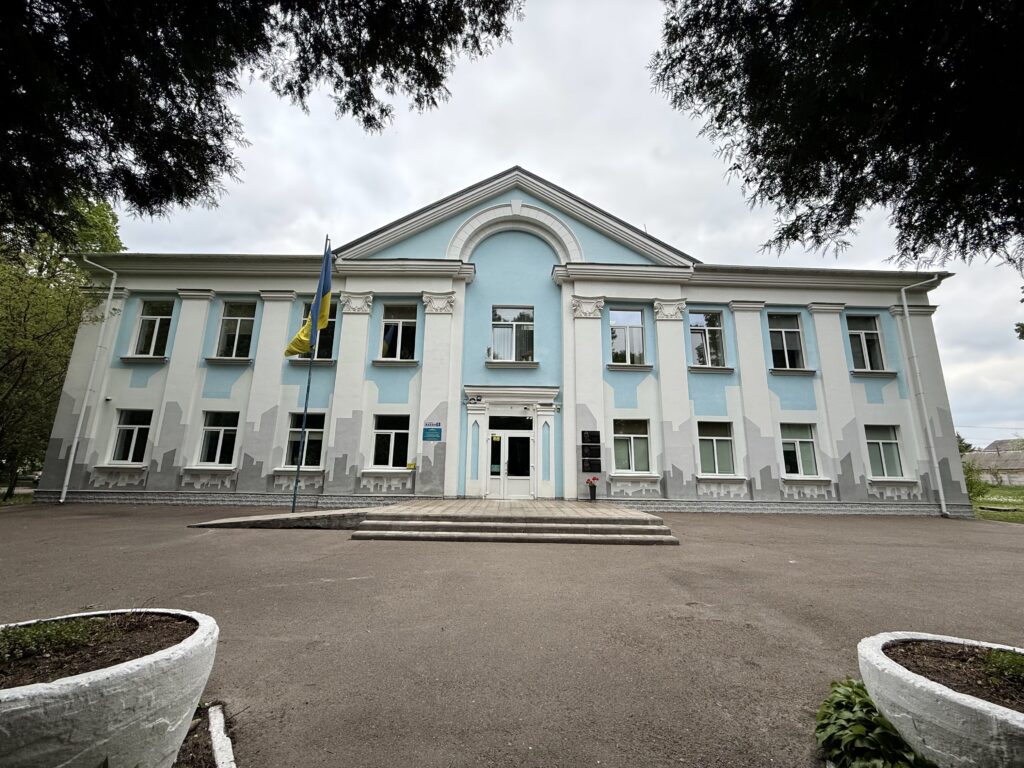
The School Without Its Own Shelter When the air raid siren sounds in Kyiv region, students of Piskivka Gymnasium named after the Heroes-Defenders of Ukraine head to the nearby hospital shelter.
Among them is Olena Matviichuk, a Ukrainian language and literature teacher, Teach for Ukraine Fellowship fellow.

“The hospital shelter we ‘borrow’ isn’t very big and has poor lighting. To make it cozier, we painted the walls in a Ukrainian folk style. During an alert, it feels like a buzzing beehive,” says Olena.


This school year, they go down there less often but still regularly — about two or three times a week. Routine. Lessons aren’t held underground; there simply aren’t the conditions for that.
This school year, they go down there less often but still regularly — about two or three times a week. Routine. Lessons aren’t held underground; there simply aren’t the conditions for that. Most students play on their phones, though Olena tries to bring board games to distract them from the screens. “If the alert is short, it’s fine. But if it lasts for hours, everyone gets exhausted.”
The shelter has two shared toilets and basic hygiene supplies — but nowhere to be alone. “The hardest part,” Olena adds, “is sitting together in a noisy, enclosed space for so long.” Still, she tries to make that time meaningful — and the students try to lift her spirits. “They’ll share a candy, tell a joke, invite me to join a game.”
She remembers one moment vividly:
“We had a minute of silence — and suddenly, the whole beehive fell quiet. It was strange and beautiful.”
Speakers appeared in the shelter spontaneously, but turned out to be a blessing — helping teachers and children maintain routines like the national minute of silence, or simply filling the silence with music when lessons can’t go on.
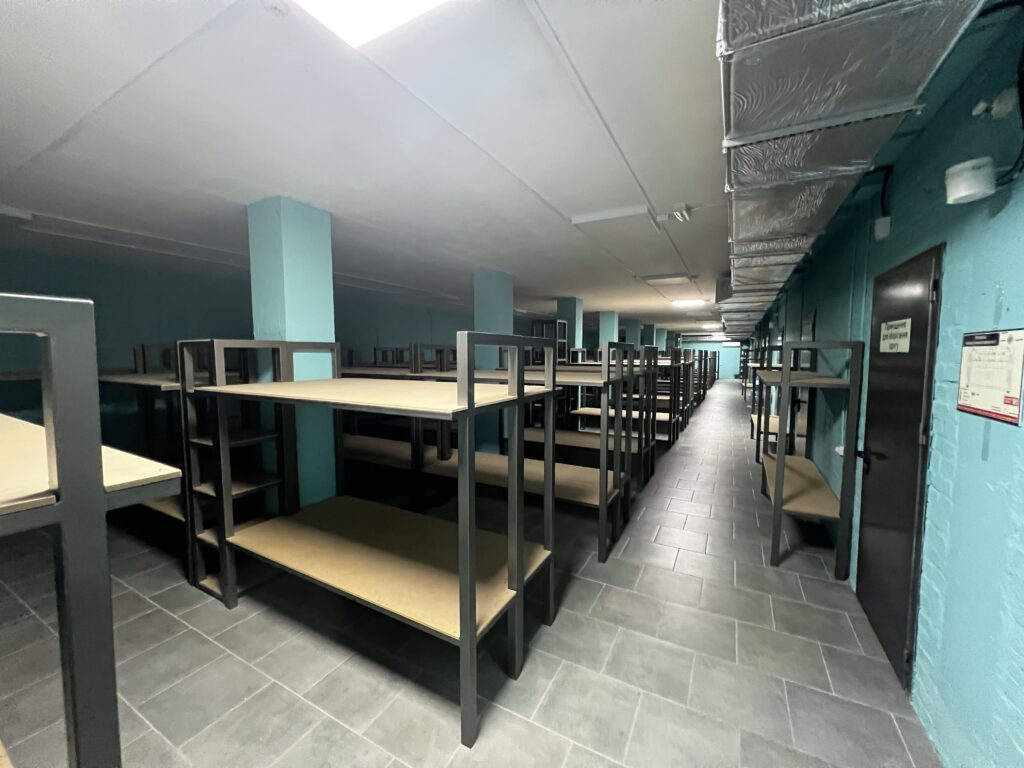
The Shelter Built During the WarThe shelter of Horishni Plavni School No. 3 in Poltava region is among the few in Ukraine constructed during the war. Yet even here, there’s not enough space for all the students.
“We can’t hold full lessons here,” says Kateryna Kulyk, a history and Ukrainian studies teacher, Teach for Ukraine Fellowship fellow. “Because of the space issue, younger students use it in the mornings, older ones in the afternoon — they study in a converted shooting range nearby.”
Inside, the walls are turquoise, with double-tier benches — like bunks. “At first they looked intimidating,” Kateryna laughs, “but now we’re used to them.”
By the entrance, roses still bloom — planted by last year’s graduating class. Kateryna admits it’s hard to keep up with the curriculum.

“Every time we go to the shelter, I have to reschedule lessons, condense material. Air raids happen almost daily — it’s the ‘new normal.’”
One of her students sums up the feeling in a single word: uncertain. “First there was COVID — I stopped understanding lessons as well as before. Then the war started.” Her classmate adds: “You just have to try harder. Nothing comes easy.”
The children remember singing songs during alerts, using those same speakers for the minute of silence — and for a bit of joy in between.
Sometimes, danger lingers in the sky all day. That’s what happens to Olena Havryliuk, Teach for Ukraine Fellowship fellow, who teaches math, financial literacy, and IT at Blystavitsky School No. 6 in Kyiv region.
“When the alert drags on for hours, the constant noise is unbearable. Once, a ninth-grader staged a mini protest — sticking notes on the wall reading ‘Let us out!’”

The only quiet spot to retreat to is a narrow hallway that doubles as a restroom area. For washing hands — wet wipes.
Still, Olena sees the shelter as a kind of informal classroom.
“Once, down there, the students confessed they didn’t understand division. So I kept explaining — even after the alert ended.”
The students, she says, value the conversations most of all. “Even if it’s hard to study, we still connect. That’s something distance learning can’t replace.” Nearby, parents have organized a small stock of snacks, blankets, and a water cooler.
A School Where Learning Never Stops At Horishni Plavni Specialized School No. 5, lessons continue even underground.
Elizabeth Dörner, an English teacher, Teach for Ukraine Fellowship fellow, descends to the divided shelter several times a week — sometimes several times a day. During one heavy attack this year, three of her five lessons took place below ground.
“I always have a Plan B — written tasks in case of an alert,” she says.


There are toilets, sinks, and even small areas for privacy. But what unsettles Elizabeth most is how accustomed the children have become.
“It’s sad that they’re so used to it. They react calmly, take their seats, and wait for instructions.”
One of her students puts it simply: “Most teachers now try to make learning easier — and it shows. But it’s war. You can’t expect perfection.”
They remember one day vividly — playing The Bunker, a psychological survival game, during an alert.
At this school, shelter learning isn’t an exception — it’s routine. The shelter just works, quietly helping the school fulfill its mission, even underground.
The mission of school shelters is to bring children back to offline learning. But as air raid alerts remain a part of everyday life for an indefinite time, these spaces have evolved from temporary refuges into full participants in the education system.
When we call them “normal,” we also have to ask — normal for what?
Teachers agree that even with all the disruptions, in-person learning remains far more valuable than remote education.
“My 8th graders alternate between online and offline weeks — and the difference is huge,” says Elizabeth Dörner. “In person, they’re more focused, more engaged. The connection is real.”
Shared experience and social contact give children a sense of rhythm, order, and belonging — even when that happens in a basement.
Because, in the end, Ukraine’s children are still growing — even during the air raid.
And perhaps, in that cramped and noisy space, a new definition of normal is being born.