The full-scale war has forced Ukrainian schools to seek different formats of education and respond flexibly to changes in the security situation. Educational institutions in frontline areas mainly operate remotely, with some cities setting up underground schools, others operating in a mixed format (alternating between face-to-face and remote learning), and a few lucky ones allowing children to return to their desks.
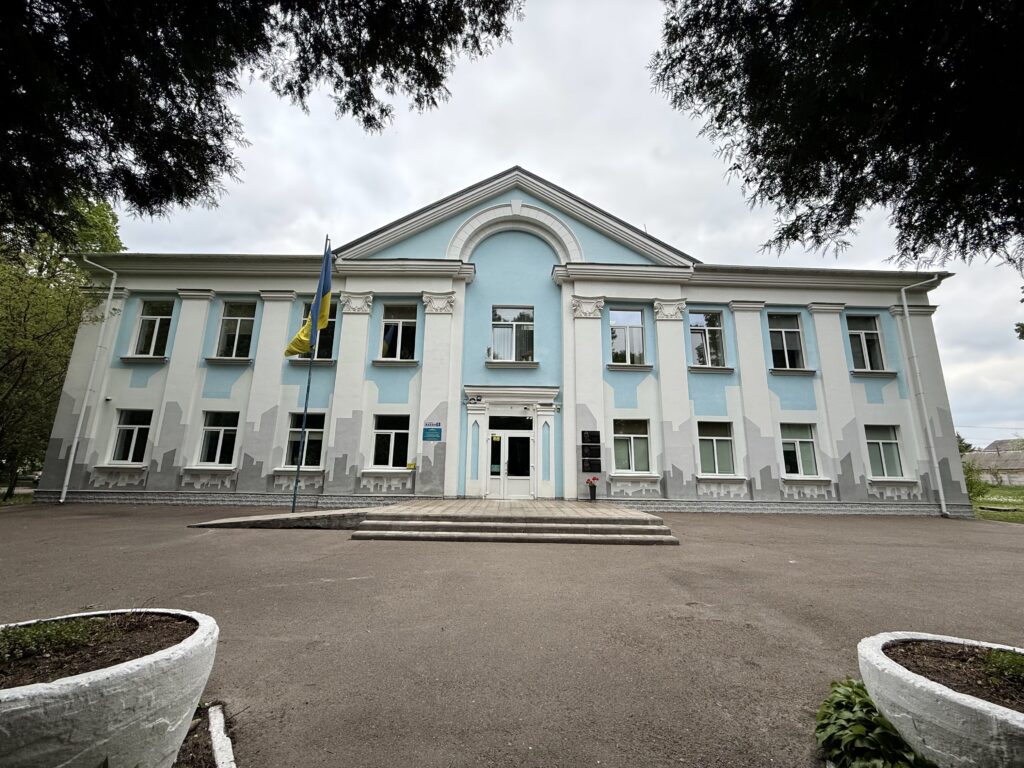
Voznesensky Lyceum No. 8 in the Mykolaiv region, although operating offline, often finds it difficult to hold classes due to prolonged air raid alerts and power outages. As a result, children are not always able to cover all the topics in the curriculum.
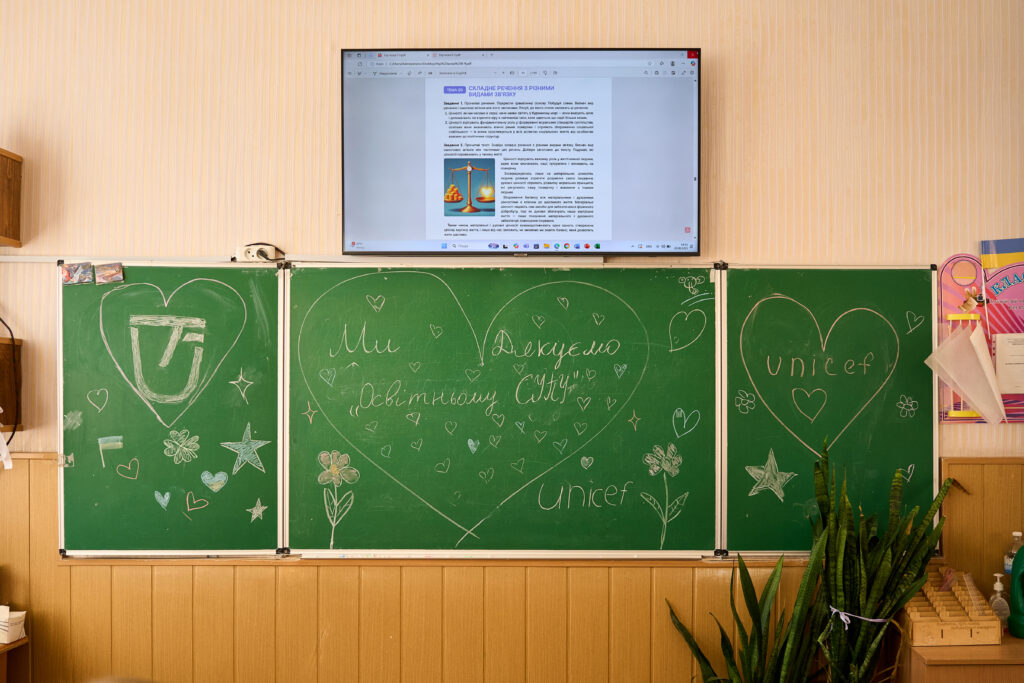
To help lyceum students fill in the gaps in their knowledge, English teacher Iryna Lisochko and her colleagues joined the NGO Teach for Ukraine’s project “Tutoring Catch-Up Centres: Overcoming Learning Losses in Emergencies,” which the organization is implementing with the assistance of the Norwegian Refugee Council (NRC) in Ukraine and with financial support from Norway.
The teacher says that these free extra classes not only help children catch up on missed material, but also give them a sense of support and provide space for socialization, which was so lacking during distance learning. In this article, Ms. Iryna talks in more detail about the specifics of classes aimed at making up for educational losses, how they differ from regular lessons, and how she creates an atmosphere of trust and support.

An individual approach and support are what distinguish remedial classes from regular lessons. Students understand that there is no assessment here, so they have no fear of making mistakes or getting a lower grade than expected. That is why their inner tension and anxiety disappear.
The main goal of these classes is to help children catch up with the curriculum without stress and to focus on the personal potential of each student, notes Iryna Lisochko. This is the essence of the tutoring approach offered by the project to make up for educational losses from the NGO Teach for Ukraine.
Iryna’s introduction to the tutoring approach began in the spring with a series of training sessions organized by the NGO, where teachers were taught about tools for making up for educational losses, as well as the basics of psychological resilience.
“Nowadays, many people talk about the need for psychological support for students, but not all teachers know how to do it correctly so as not to harm the child. This is important because there are children with different experiences in the classroom, and they may react differently to the teaching material, topics for discussion, air raid sirens, etc.,” says Iryna Lisochko.
The teacher and her colleagues began working to make up for educational losses back in the summer. At that time, the lyceum held a three-week intensive course for grades 5–11. She says that at first they were worried about whether they would be able to recruit the necessary number of children for the groups, but there were quite a few willing participants. To determine the needs of each child, teachers conducted an initial survey on their subjects. Of course, priority was given to children with basic, intermediate, and sufficient levels of knowledge, but those with advanced knowledge were not turned away.
“We understood that for some of the children, these classes would be an opportunity not only to improve their knowledge, but also to socialize, share experiences, and feel support from their peers and teachers,” emphasizes Iryna.

During tutoring sessions. Photo provided by Nataliya Yasyshenova
Classes to make up for educational losses continued at the lyceum in the fall, where for three months children had the opportunity to attend classes in various subjects twice a week, as well as join “tutoring hours.” — a time when teachers can talk to children about their interests, talents, strengths, and experiences (more on this below — ed.).
“I worked with fifth graders. Our classes took place two or three times a week: on weekdays after school and on Saturdays. We worked even during power outages and in shelters when there were alarms, but everyone was united by one desire — the desire to learn. Even though classes usually lasted 45 minutes, students often stayed longer just to talk, share their experiences and observations, and I gave them that space,” the teacher recalls.
According to her, during regular lessons, when you have to cover the curriculum, there is not always time to just talk to the children and give each and every one of them attention. Instead, classes aimed at making up for educational losses provide an opportunity to pause, slow down, and focus specifically on the needs of the students. If necessary, teachers can also devote not one but several classes to individual topics.
As Iryna Lisochko notes, teaching is also influenced by the number of children: in such classes, not the entire class works, but a small group, usually up to seven to nine students. This greatly facilitates learning, as it allows for high-quality communication in English with each and every student. In a regular class of 20–25 students, it is difficult to ensure active language practice and give attention to everyone, but with small groups, it is much easier and more effective.
“When, after a few weeks, a child who previously disliked English suddenly says, ‘I like it!’, you understand the value of this approach. Perhaps their knowledge is not yet perfect, but the child already perceives the subject differently, is not afraid, and most importantly, becomes interested,” the teacher shares.

Ms. Iryna says that she always tries to gauge the mood of her students at the beginning of each class. Short interactive exercises, also known as icebreakers, help her establish communication and create a positive atmosphere. One such icebreaker even led to a special tradition between the teacher and her students: tea time.
“Once, we started an English class with an icebreaker where the children had to choose a picture that matched their mood. Among the pictures were several with a cup of tea, and most of the students chose them. When I asked them to explain their choice, it turned out that some of them had not had time to eat breakfast that morning, while for others, the picture meant warmth and comfort,“ says the teacher. ”So I offered to treat everyone to tea. I had disposable cups, I brewed tea, and the children drank it during the lesson. This created a special atmosphere of comfort and trust in the classroom.”
If the students come to class tired (classes often take place after all other lessons), then the teacher conducts physical activity breaks: the children can dance to one of the English songs with movements, or do other exercises to cheer themselves up a little.
To keep the children’s attention throughout the lesson, Ms. Iryna alternates between different types of activities: if the children get bored of reading, the teacher offers them something to listen to, watch, or write. She is also assisted by manuals with various exercises, games, and topics provided to teachers as part of the project.
“It was very valuable for me that we were offered ready-made solutions — this significantly saves time, which teachers always lack. In English classes, I often use exercises from the subject manual. By the way, children like interactive tasks on the WordWall platform the most. During tutoring hours, I use materials from the facilitation manual, which includes various exercises for calming down, self-analysis, and much more,” the teacher notes.
We would like to add that access to manuals for catching up on knowledge and skills in six subjects for grades 5–11 is available free of charge on the organization’s website at this link.

As mentioned earlier, in addition to subject lessons, Ms. Iryna also held tutoring sessions with her students, during which they talked about emotions, talents, hobbies, dreams, strengths, critical and creative thinking, and much more. She says that such conversations allow students to open up more.
“I remember there was a girl in my group who found English very difficult. During class, she was mostly silent and shy about reading aloud because she was afraid of making mistakes. During one of the tutoring sessions, we were talking to the children about how it’s okay to make mistakes because that’s how we learn. The girl saw that others also made mistakes but were not afraid to move on, so with each lesson she became more confident. The support of her classmates also helped a lot: they encouraged her and repeated that she would succeed. Now this student is among the first to want to answer,” says Iryna Lisochko happily.
During tutoring hours, considerable attention was also paid to psychological resilience. The teacher says that sometimes, when the air raid siren sounds, some of the children can become very anxious, and this can spread to others. Therefore, it is important for teachers to know techniques and exercises to calm students down at such moments.
“In class, I explained to the children how our bodies can react to stress. Together, we practiced square breathing and counted various objects in the shelter to shift our attention. I must say that the materials from the Better Learning Programme, developed by the Norwegian Refugee Council (NRC), were very helpful. It contains ready-made exercises that can be used to talk to children about fear and how to act in stressful situations,” the teacher shares.

There are often days when students come to class after air raid sirens, shelling, or power outages. Not everyone manages to complete their homework in such conditions, some have no motivation to study and look upset, so, according to Iryna Lisochko, it is important for teachers to show empathy.
“Support should be an integral part of learning. If a child has not completed their homework because there was no electricity or other difficulties, it’s okay, they will do it next time. We all live in the same conditions, so it is important not to pressure them, but to support them,” says the teacher.
In addition, Iryna emphasizes that even within the same class, there may be children with different life experiences: some have parents on the front lines, some have lost relatives or friends, some have been forced to leave their homes… Therefore, teaching materials and work formats must be selected with particular care.
During one of my classes, when it was the next student’s turn to answer, he said he didn’t want to participate. I didn’t insist. But he started telling me that he hadn’t slept all night because he was worried about his dad, who hadn’t been in touch. At that moment, I realized the conditions in which our children sometimes live, and yet we expect them to concentrate, learn, and pronounce words correctly. This boy’s thoughts were not about the English language at all,” says the teacher.
She says that at first she was confused because she didn’t know how best to interact: should she continue the lesson or stop and listen? But if a child has already started talking about their experiences in front of everyone, then it hurts and you have to give them space to express themselves. Later, to shift the children’s attention to something positive, the teacher asked them to draw what gives them energy and helps them cope in difficult situations.
“This helped the boy focus on what supports and calms him. Such techniques from tutoring sessions often become necessary in the middle of a regular lesson,” the teacher emphasizes.

Ms. Iryna says that during the project she realized how important it is to take into account the psychological state of the child and their readiness to learn.
“How can we demand knowledge if the child is emotionally exhausted or unable to concentrate? That is why it is important not only to follow the curriculum, but also to pay attention to the individual needs of students. It is better to do less but better, because the quality of knowledge acquired depends not so much on the number of exercises as on how the child feels and whether they are ready to learn,” notes Iryna Lisochko.
According to her, the project changed not only the students but also her approach to work. The teacher realized that it is not enough for educators to simply provide educational material; they need to teach children to learn in the circumstances in which many Ukrainians currently live: with power outages, air raid sirens, nighttime shelling…
“Completing the curriculum is important, but it is much more important to focus on the child, their pace, and their emotional state. If it is difficult for adults now, it is even more difficult for children. It is very valuable that projects such as those created by the NGO Teach for Ukraine help students develop and learn, whatever the circumstances,” concluded Iryna Lisochko.