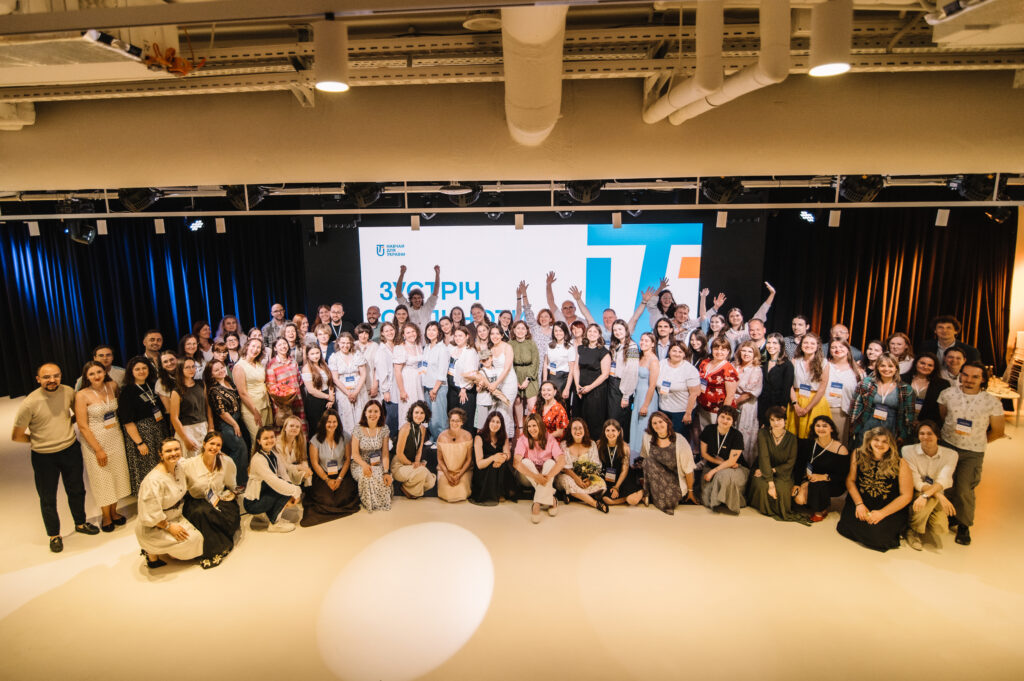
On November 27, the non-governmental organization Teach for Ukraine held the Third Annual Strategic Catch-Up Forum, organized with the support of the global fund Education Cannot Wait (ECW) and the Ministry of Education and Science of Ukraine. The event brought together 170 participants – representatives of the government, civil society organizations, and international donors – to discuss challenges and collaboratively seek solutions for education during wartime. Particular attention was given to addressing children’s learning losses, including their academic and socio-emotional support, the development of mentoring and peer-to-peer programs, discussions of flexible learning formats, adaptation of programs for vulnerable groups, and professional support and development for teachers.
This was the third strategic forum organized by the NGO Teach for Ukraine, aimed at fostering a shared vision for a system of catch-up learning and supporting children in their educational journey. First held in December 2023, the event emerged as a response to the growing learning losses following quarantine restrictions and the onset of the full-scale war. Since then, the forum has become an annual platform for in-depth discussions on educational recovery, the exchange of experience, and the search for solutions that address the real needs of children, teachers, and schools.
“III Annual Strategic Forum has an important goal: to unite and synchronize the efforts and experiences of various civil society organizations in recovering learning losses. Only by working together can we create systemic solutions that genuinely meet the needs of children in Ukraine. This forum brings together 50 Ukrainian NGOs, 12 institutions – including the Ministry of Education and Science of Ukraine – the embassies of the United States, Germany, and Estonia, the Delegation of the European Union, as well as 17 international and donor organizations. It is a unique platform that has been generating new ideas, partnerships, and initiatives for three years. A space where education remains a priority, even when circumstances appear to pull us in the opposite direction. None of us can do everything, but each of us can do something,” said Natalia Etten, head of the NGO Teach for Ukraine, as she opened the event.

In his opening speech, First Deputy Minister of Education and Science of Ukraine Yevhen Kudriavets highlighted the magnitude of the challenges and the necessity of systematic efforts to address learning losses:
“Every child in the education system possesses an extraordinary number of individual characteristics. The level of learning losses estimated in 2022 primarily reflected the losses caused by the pandemic. As the world began to recover in 2022 and international organizations started developing their initial strategies to address learning losses, Ukrainian children faced a new crisis: a full-scale war. This September, when a new underground school – a shelter – opened, some Ukrainian children in grades 5 and 6 reported that it was their first time attending in-person classes. Many of them had not been in a classroom with other children since 2020.”
Yevhen Kudriavets highlighted that these figures illustrate the extensive challenges the education system is presently facing and working to overcome. According to him, the level of learning losses is far more severe than initially estimated, as during the pandemic and the full-scale war, children have not only accumulated knowledge gaps but also experienced substantial psychological and individual differences.
According to the First Deputy Minister of Education and Science, an effective model for recovering learning losses should be bottom-up and leverage a range of tools, including artificial intelligence to create individual learning trajectories. Unlike international methodologies developed for standard contexts, in Ukraine each child has a complex set of experiences and unique circumstances that must be considered. While this remains a significant undertaking, an important step toward establishing a systematic and more effective approach is the development of a new electronic guide on learning loss recovery, which will soon be freely accessible to educators. It includes a catalogue of solutions for teachers, school leaders, school teams, community representatives, and partners, providing a systematic overview of the issue, ready-to-use tools, and long-term support pathways for children.

Yaroslava Dio, head of the expert group at the Directorate for Digital Skill Development and Digitalization of Education, Ministry of Digital Transformation, emphasized:
“Education today is an investment in sustainability, in the future, and in the national security of our country. The learning losses presently affecting our students, particularly those studying abroad, constitute a priority issue within the context of education digitalization. We recognize that the digital tools we develop and implement should support this effort and minimize the challenges that depend on teachers. We cannot make progress on this issue without the educational community, which serves as a guide for state institutions and, importantly, as mentors for our students. We are very pleased to be working closely with our partners, the NGO Teach for Ukraine. This is not the first product we have developed together, and it is guided entirely by the needs of our primary users: teachers who require our support and digital tools.”
Tymofii Brik, Rector of the Kyiv School of Economics, emphasized that learning losses, which may be less pronounced in high school, become particularly evident in the early years of university. Consequently, efforts to address them are also being undertaken in higher education institutions: “At the university, we are already working with the consequences of learning losses. We recognize how challenging it can be for first-year students, who may not yet have developed the skills to work collaboratively, write texts, or read them accurately. As a university, we are striving to engage strategically on this issue, particularly within the consortium of organizations.”
The forum is part of a multi-year sustainability program funded by Education Cannot Wait, a UN Global Fund supporting education in emergencies and protracted crises, and implemented with the support of the Ministry of Education and Science of Ukraine. The program aims to deliver a comprehensive humanitarian response to the challenges facing education during wartime. In Ukraine, the program is implemented by two consortia and reaches over 40,000 children and 12,000 teachers.

Teach for Ukraine participates in a consortium of national organizations led by the KSE FOUNDATION Charitable Foundation. The consortium also includes the Save Ed Charitable Foundation and the Osvitoria Public Association, as well as the NGOs Teach for Ukraine, Projector Foundation, and EdCamp Ukraine. Funds and organizations, together with Teach for Ukraine, showcased their achievements over more than a year of collaboration, sharing field stories that highlight the challenges of education in emergencies and the responses of the public sector. The results of the activities were presented by Maryna Borysenko, Vice President of the KSE FOUNDATION Charitable Foundation; Alyona Tsybulska, Head of the Teaching Department at the Osvitoria Public Association; Daria Dolimbaieva, Head of Communications at EdCamp Ukraine; Oleksandra Chubrei, ECW Project Lead at the Projector Foundation; Inna Lubynets, SavED Project Manager and Head of MYRP Project Implementation on behalf of SavED; and Ksenia Kalyna, Head of the ECW Long-Term Sustainability Program at the NGO Teach for Ukraine. This session was moderated by Maryna Damaskina, Head of the Local Consortium for the Implementation of the Multi-Year Sustainability Program under the Education Cannot Wait Fund.


The NGO Teach for Ukraine led a thematic subgroup focused on education in emergencies. The working subgroup comprises UN agencies, international non-governmental organizations, and Ukrainian civil society organizations, with the Ministry of Education and Science of Ukraine and the international organization Save the Children serving as co-coordinators.
During the forum, Anastasia Donska, Program Director of the NGO Teach for Ukraine, presented the world’s first randomized controlled trial (RCT) in the field of education during wartime in Ukraine, conducted jointly with the World Bank. It involved nearly 10,000 students in grades 5-10 from across all regions of the country. The conclusions emphasize that education should not be considered solely a post-conflict priority. It constitutes an integral component of resilience development and serves as a central pillar of both humanitarian response and long-term planning. To see the results of the study, please follow this link. The interventions also enhance peer support, fostered positive learning attitudes and student investments, and developed social-emotional skills, thereby contributing to both academic and psychological resilience. It proves that investing in education during wartime can have a meaningful impact, is feasible, and scalable. Discover how this approach is implemented in schools in the series “Tutoring at School.”
Anastasia Donska emphasized: “More than 40 NGOs are represented at the forum. This demonstrates the interest, commitment, and necessity of working collaboratively. Consequently, we are establishing a platform to facilitate effective interaction, foster new partnerships, and share formats and recommendations that are valuable to civil society organizations, the public sector, the Ministry of Education and Science of Ukraine, and the international community.”

During the first session, conducted in an open dialogue format, experts, educators, and program participants discussed partnership strategies for recovering learning losses, exploring the question: What actions can be taken to make learning a priority?
The panel brought together a wide range of experiences, yet they shared a common understanding: Ukrainian education is sustained not by miracles, but by people – those who take initiative, know how to collaborate, rely on data, plan for the long term, and provide effective learning formats. It is the collective leadership of communities, teachers, principals, children and parents.
“Ukrainian society has taken every possible measure to ensure that education remains a genuine priority, even during wartime. These bottom-up leadership actions at the community level, among teachers, within the public sector, and, of course, at the state level are extremely important,” said Yevhen Kudriavets. The same sentiment was reflected in participants’ stories, which highlighted the importance of partnerships: “You have to be able to work in large groups and consortia while relying on data,” emphasized Tymofii Brik.
Yaroslava Dio emphasized the long-term perspective: “There should be a 10-year vision, and digitalization serves as a means to develop solutions that will not become obsolete tomorrow.”
Teachers spoke about their everyday experiences. Olena Kolesnyk, a participant in the Teach program and a history teacher at Hrebinky Academic Lyceum, noted that online classes to compensate for lost learning time provide “first and foremost a comfortable and safe space” where children “are not afraid to make mistakes.” Student Daria confirmed Olena’s words and expressed a simple wish: “It would have been great to have more classes like this in 11th grade.”
Nataliia Mykhalevych, Director of Krasnosilskyi Lyceum in the Odeska oblast, highlighted the challenges of the educational process in schools: “We work in three shifts… But when you have a team and parents who listen to you, time flies.” Her words, ‘take the best from life,’ served as practical advice: share experiences, support one another, and seize every opportunity to help.
Ultimately, the panel provided a realistic picture of what underpins education today: local leadership, partnerships, data, digital solutions, and the steady, persistent efforts of people who refuse to let education halt.

Oksana Pasichnyk, a computer science teacher at Sykhivskyi Lyceum and co-author of the State Standards of Education and model computer science programs, presented the electronic guide for catching up on knowledge issued by the Ministry of Education and Science of Ukraine. According to her, although numerous initiatives exist to help students catch up on knowledge, this information does not always reach end users in a sufficiently organized manner. Teachers who work with students daily often receive fragments of solutions, individual tools, or materials, but do not always perceive the overall logic for constructing effective support to help students catch up. The purpose of the guide is to gather and systematize existing materials and tools into a coherent set of actions, enabling various participants in the educational process to work in a coordinated manner toward recovering learning losses:
“Our goal should not be to catch up on something that has been missed. Each student has an individual learning trajectory, and attempting to make everyone follow the same pace will likely be ineffective. Instead, we should aim to guide them back to the general trajectory of development, ensuring that whatever caused their learning difficulties no longer holds them back.”
An online presentation of the guide for a broader audience of educators is scheduled for December 10, 2025.


The second session was devoted to mentoring and peer-to-peer support. In the panel discussion “Youth for Mentoring: Promoting Intellectual Volunteering,” experts, public figures, and coordinators of nationwide mentoring programs examined the role of young people in supporting students and advancing mentoring practices.
Roman Hryshchuk, Member of Parliament of Ukraine, highlighted the problem of a shortage of young specialists in educational institutions. In his view, one potential solution is to engage students who are not pursuing teaching professions. He noted:
“The number of young teachers in the education system is declining drastically. While in 2015, 17 percent of teachers in Ukraine were under 30 years old, that figure has now fallen to 9 percent and continues to decrease. How can we address this issue beyond increasing salaries, which we are already working on? There is significant potential among schoolchildren and university students, individuals who are eager to contribute meaningfully and are inspired by the examples of volunteers and defenders. On one hand, these individuals can participate in practical activities, but on the other, their potential should be directed toward intellectual volunteering.”
Inna Sovsun, Member of Parliament of Ukraine, emphasizes that the worst approach to addressing learning losses is to lower educational standards during wartime. She is the initiator of a draft law on recovering learning losses, which aims primarily to expand the resources and support mechanisms within the education system. Vladyslav Greziev, co-founder and Chairman of the Board of Zminotvortsi and CEO of Lobby X, noted that, based on his experience in the Khersonska and Mykolaivska oblasts, in addition to catching up on academic knowledge, significant attention should be given to soft skills, social integration, and the ability to express one’s opinions: “We can address these shortcomings with online, through additional classes, student engagement, and volunteering, but this is insufficient. One of the greatest needs in the education system remains the opportunity for in-person learning.”
According to Iryna Kopayhorodska, coordinator of the StudMentor intellectual volunteering program at the Teach for Ukraine NGO, one of the problems the program addresses is supporting teachers in working with learning losses caused by these very people. They are not ready to devote their lives to teaching. They are successful in their field or are just starting their professional career, but they have the resources to help children through intellectual volunteering. Viktoriia Klymas, community manager of the 10:11 Program mentor community, noted that the ‘youth mentoring youth’ approach creates developmental opportunities for both mentors and mentees, not just for the latter, as might be assumed.
Ksenia Kalyna, moderator of the discussion and Head of the ECW Long-Term Sustainability Program at Teach for Ukraine NGO, emphasized that this panel illustrated a simple yet important point: today, anyone willing can participate in mentoring or intellectual volunteering, as there are already at least three active programs in Ukraine open to young people and professionals across various fields.

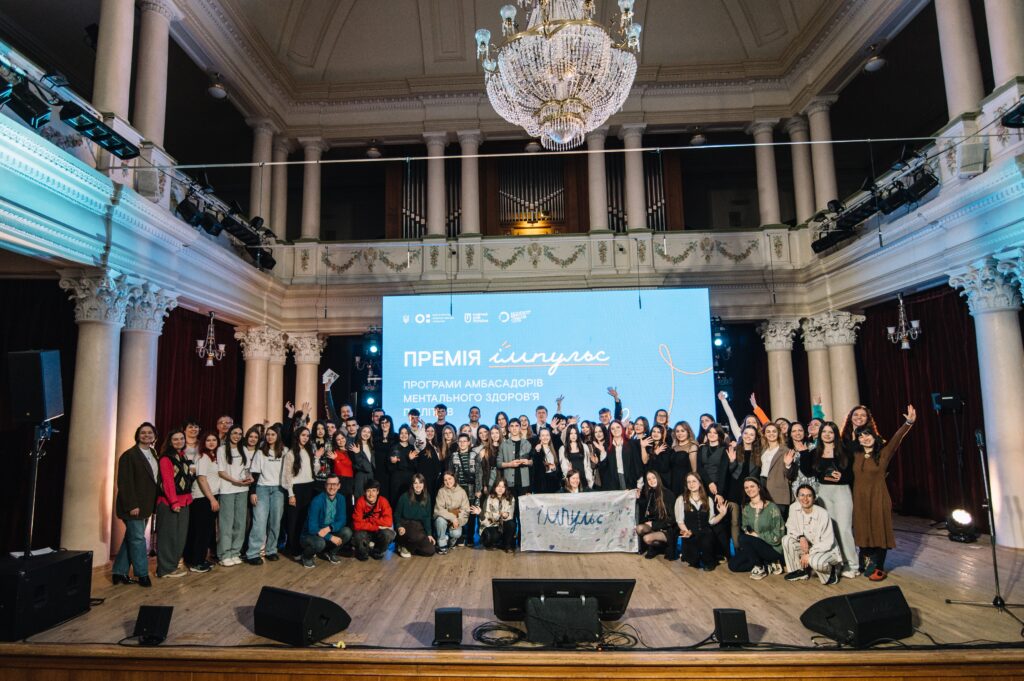
The forum placed special emphasis on the pilot adolescent mental health support program Impulse, developed by the NGO Teach for Ukraine. Program coordinator Lesia Kravchuk presented the findings of a study on students’ needs, along with the program’s initial practical achievements. The analytical study, ‘Well-Being and Learning of Adolescents in Wartime’ covered over 3,400 children, parents, teachers, and school psychologists across eight frontline regions of Ukraine. The study revealed the impact of war on children’s mental well-being and learning capacity, highlighting the need for comprehensive mental health support within schools. The program coordinator emphasizes that gaps in knowledge arise not only from lessons missed due to anxiety but also from children’s psycho-emotional state and their individual emotional attitudes toward learning: “Without a thorough understanding of psychological challenges, efforts to catch up on knowledge cannot be systematic or effective.” The full text of the study is available at the following link.
Lana Chubakha, national ambassador for the Impulse program, stand-up comedian, musician, paramedic with the Hospitaliers volunteer battalion, and activist, also participated in the presentation.
“Based on my observations during the Impulse program camp for teenagers, adolescents from frontline areas are remarkably self-aware. Spending a few days with them, observing their communication and interactions, was an incredible reassurance for me. These children possess the values essential for our future and our country. They are highly empathetic, show respect not only to adults but also to one another, and demonstrate a strong sense of equality,” shared Lana Chubakha.


The third session was devoted to the discussion of online, offline and blended learning formats. Erin Wall, Technical Advisor on Education at Save the Children, participated in the discussion, alongside Eduard Kliuiev, PhD in Technical Sciences and a physics and mathematics teacher at the Samara Lyceum and Pishchansky Lyceum in Dnipropetrovska Oblast, and Viktoria Lisnycha, Ukrainian language and literature teacher and coordinator of the Impulse program. The discussion was moderated by Oksana Ziobro, Communications Director at Teach for Ukraine. The discussion was moderated by Oksana Ziobro, Communications Director at the NGO Teach for Ukraine.
During the panel discussion, the students plunged into the reality where each school lives its own story. In some cities, anxiety interrupts lessons once a week, in others, children spend several hours underground. Shelters are also different: from equipped separate classes to huge halls without zoning.
“The greatest challenge is the rapid adaptation required of teachers. If you plan a lesson in one format and an air raid siren sounds, you must switch to another format instantly,” shared Eduard Kliuiev.
Ukrainian language teacher Viktoriia Lisnycha discussed socialization during blended learning and the return to in-person classes: “The Impulse program has been an invaluable resource under these circumstances. The children, who serve as ambassadors for the project, lead psychological relief exercises for younger students when we return to offline learning. This fosters connections across age groups, and the students always look forward to new activities.”
Erin Wall, Technical Advisor at Save the Children, emphasized: “When children have access to education, it feels like we have fulfilled our mission. However, for us as education professionals, access alone is insufficient. The format provides the conditions, but there must also be a genuine opportunity to learn.”
Following the discussion, participants concurred that access to education is only the first step; the key questions concern whether students are actually learning, how they interact with teachers and peers, and whether the quality of education can be maintained during wartime.

Khrystyna Bedriy, an expert on tutoring programs at the NGO Teach for Ukraine and moderator of the discussion, emphasized that the concept of ‘vulnerable children’ has broadened. It now encompasses children studying in shelters, those who have lost their homes or parents, among others. Roman Shyyan, Deputy Director of the New Ukrainian School, noted that educational standards are sufficiently flexible to address the needs of vulnerable children, “but most importantly, they remain competency-oriented.”
Konstiantyn Galak, UNICEF Inclusive Education Specialist, emphasized that the safety and accessibility of the educational environment will remain a top priority in 2026: “This includes architectural accessibility, shelter repairs, and ensuring that shelters are accessible to children with disabilities.” Anna Pavlishcheva, an inclusive education trainer, highlighted the importance of collaboration between teachers and teaching assistants: “We need to train teachers to work effectively with assistants as it is an active approach that should be comfortable for everyone.”
Inna Stepanets, Project Manager at Teach for Ukraine, emphasized the importance of adapting practices to the actual needs of children: “We have to give children what they need, not just what we can provide.” She noted that the team is working to tailor teaching materials based on research and feedback from children, parents, and teachers to ensure the most relevant support. Olena Bieloliptseva, Head of Educational Programs at the NGO Responsible Citizens, highlighted the significance of including children’s voices in the development of educational solutions. She stressed that, next year, it will be essential to strengthen the practice of incorporating children’s opinions when creating materials and programs.

During the session, representatives from the public sector and state institutions reflected on their experiences in organizing programs to catch up on knowledge and develop skills, sharing the changes observed from the start of implementation to the completion of the projects. The discussion was moderated by Yuliia Bilyk, Head of the Education Recovery Program at the NGO Teach for Ukraine.
Yurii Zakharchuk, Head of Educational Projects at the MriyDiy Educational Foundation, emphasized the importance of relying on objective data and evidence-based approaches in programs aimed at helping students catch up on their studies. He recommended using the results of nationwide external assessments of education quality and PISA research to analyze gaps in primary and secondary schools, highlighting that ‘the socio-economic and cultural background of children’ remains a key factor contributing to learning losses. Liubov Zaliubovska, Program Director of the GoGlobal Educational Foundation, discussed the development and adaptation of teaching aids for primary schools, which were transformed into an interactive online format, enabling ‘children to study online when offline learning is not possible.’ This approach allowed the program to reach over 3,000 students during the summer holidays, and the materials are now incorporated into the school curriculum.
Vasyl Tereshchenko, Deputy Director of the Ukrainian Center for Educational Quality Assessment, highlighted that national assessment results reveal significant educational gaps, particularly among children from rural areas, who fall several years behind their urban peers in academic achievement. Oksana Pasichnyk, a teacher and co-author of the State Standards, noted that successful implementation of such programs requires a systematic approach, including tutoring support and digital teaching aids, in order to ‘demonstrate the full range of existing solutions’ and provide support for teachers, who are often overburdened. Daria Dolimbaieva, Head of the Communications Department at EdCamp Ukraine, shared her experience with the social-emotional and ethical learning program, which the team launched in 2019. From the outset, EdCamp Ukraine adapted materials from the international community while taking the wartime context into account.
Overall, discussion participants emphasized that effective programs for catching up on knowledge and developing skills should be data-driven, flexible, and accessible, while also accounting for regional differences and the psycho-emotional needs of children.

Yulia Fokina, Director of the Hrebinky Academic Lyceum and mentor in the Teach for Ukraine program, shared that her institution had conducted a survey of teachers regarding their professional development needs. The three main requests identified were: psychological support to ensure emotional stability and prevent burnout; tools for working with children with special educational needs, including guidance on creating individualized learning projects; and the integration of artificial intelligence into the educational process.
Hanna Hladkova, Head of the Professional Development Department for Teaching Staff at the Ukrainian Institute of Education Development, noted that research indicates only 7% of teachers are satisfied with their professional development. She emphasized the need for greater autonomy in selecting the format and content of professional development, which will be addressed through an experimental teacher professional development platform scheduled to launch in 2026. Additional factors important to teachers include financial support, high-quality professional development processes, and a peer-to-peer approach, allowing them to receive practical guidance from experienced teachers through supervision.
Iurii Gaiduchenko, Program Director of the Osvitoria Public Union, emphasized that before launching any educational projects, organizations must conduct thorough assessments of schools’ needs to avoid duplicating initiatives and overburdening teachers, who are already operating under high levels of fatigue. He highlighted that training delivered within schools and professional communities is three times more effective than training conducted by external specialists.
Olha Kazakova, Manager of the Training and Research Department at Teach for Ukraine, highlighted that the success of educational programs largely depends on addressing teachers’ needs. She noted that teachers clearly articulate their requirements: practical support during the implementation of new tools, high-quality training formats rather than traditional lectures, and opportunities for guidance and supervision. She emphasized that supervision is one of the most powerful tools not only for fostering psychological resilience but also for promoting professional reflection and strengthening school teams.
Marco Fuduli, Education Specialist at the Norwegian Refugee Council, emphasized that systematic support for teachers is crucial in crisis situations. He noted that international humanitarian organizations are increasingly shifting from short-term training courses to long-term support programs and models that strengthen school teams from within.
Moderator Inna Rakhmistriuk, Head of the Teach for Ukraine program, emphasized that strong school teams are built where there is trust, peer-to-peer support, supervision, and the opportunity to influence one’s own professional development trajectories. In wartime, professional development is not only about skills or teaching methods, but also about replenishing resources, recognizing the role of the teacher, and working in an environment with support and like-minded colleagues.


III Annual Strategic Forum, held by the NGO Teach for Ukraine, demonstrated that catching up on learning losses is a long-term challenge requiring joint, systematic, and coordinated efforts. Data, partnerships, digital solutions, mentoring, mental health support, community experience, and the daily work of teachers all contribute to a new model of education for a sustainable Ukraine. The forum provided a space for representatives of the state, the public sector, and international partners to not only discuss challenges but also present practical tools and evidence-based approaches already working in schools. What unites all participants is the belief that education remains a priority, even in times of war. Through collaborative efforts, we can create conditions in which every child has the opportunity to develop, receive support, and access quality education today and in the future.
The forum was held under the Multi-Year Resilience Programme 2024-2026 (MYRP) and funded through Education Cannot Wait (ECW), the United Nations global fund for education in emergencies and protracted crises. The MYRP in Ukraine is supported by the Ministry of Education and Science of Ukraine.